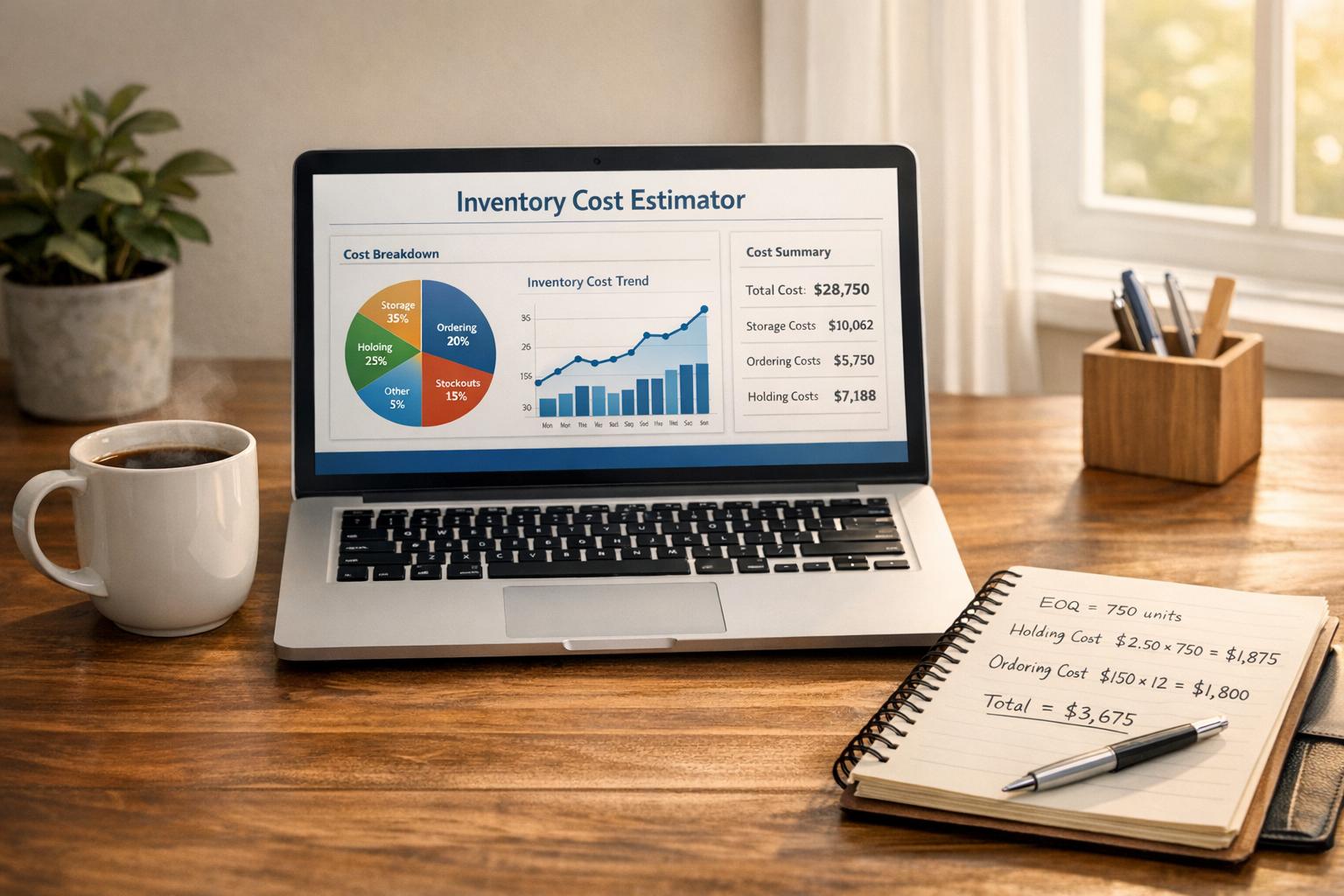
Understanding Inventory Expenses with Our Cost Estimator
Managing a business means keeping a close eye on every dollar spent, especially when it comes to storing goods. Inventory holding expenses can quietly drain your budget if left unchecked, but figuring out the exact amount doesn’t need to be complicated. That’s where a reliable tool for calculating storage costs comes in handy—it gives you clarity on what you’re spending over a set timeframe.
Why Tracking Costs Matters
Every item sitting in a warehouse or on a shelf costs money beyond its purchase price. Think about rent for storage space, utilities, staff to manage stock, and even potential losses from damaged or outdated products. For small businesses, these numbers add up fast and can impact cash flow. Larger operations might struggle with optimizing stock levels without a clear view of expenses. By estimating the financial burden of holding goods, you’re better equipped to decide how much inventory to keep on hand.
Make Smarter Decisions
Armed with accurate data, you can cut unnecessary costs and boost efficiency. Maybe it’s time to reorder less frequently or negotiate better storage rates. Whatever your next step, having a solid grasp of your numbers is the foundation for growth. Try our free calculator today and take control of your business finances!
FAQs
What is a holding cost percentage, and how do I find mine?
Holding cost percentage represents the annual cost of storing inventory, including things like warehousing, insurance, and depreciation. It’s usually expressed as a percentage of the inventory’s value. If you’re unsure, check with your accounting team or industry benchmarks—common ranges are between 15% and 30% for many businesses. You can tweak the number in our tool to see how it impacts your total.
Why should I care about inventory holding costs?
Knowing your holding costs helps you avoid overstocking, which ties up cash and eats into profits. These expenses can sneak up on you—think rent for storage space or spoilage of unsold goods. By using our estimator, you get a clear picture of what you’re spending and can adjust your inventory strategy to save money.
Can I use this tool for any type of business?
Absolutely! Whether you run a retail shop, a manufacturing unit, or an e-commerce store, this tool works for anyone with inventory. As long as you’ve got an idea of your average stock value and holding cost percentage, you’re good to go. It’s designed to be flexible for all kinds of industries.