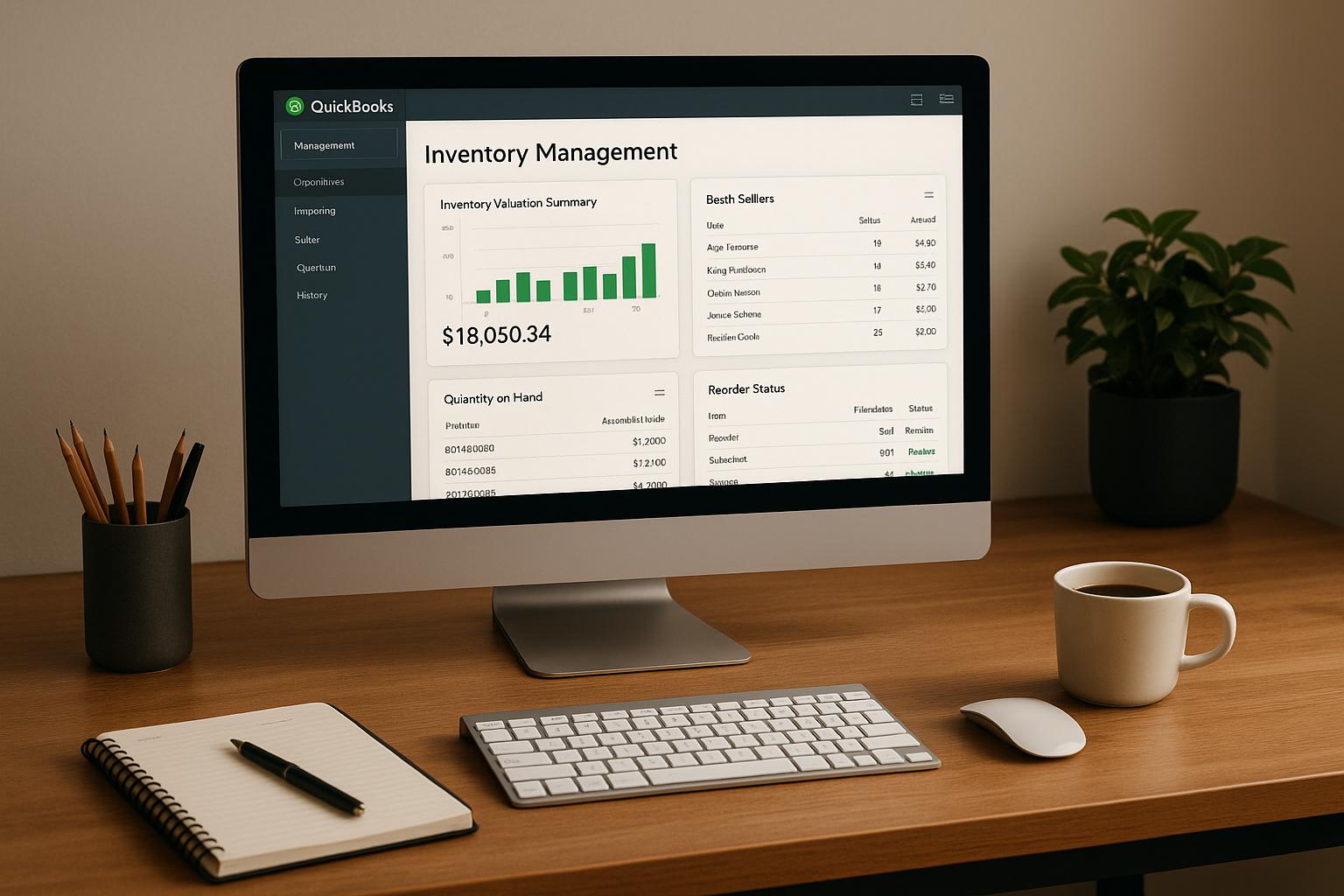

Cycle counting can help small businesses maintain accurate inventory records without the hassle of annual full physical counts. By counting smaller sections of inventory on a regular schedule, you can quickly identify and fix discrepancies, avoid stockouts, and improve financial accuracy. Here are the top five practices to make cycle counting effective:
- Set a Regular Schedule: Count inventory in manageable sections daily, weekly, or monthly, depending on your business needs.
- Prioritize with ABC Analysis: Focus on high-value (A) items more frequently, while medium (B) and low-value (C) items can be checked less often.
- Use Barcode Scanning Technology: Eliminate manual data entry errors by scanning items and updating records in real time.
- Train Your Staff: Ensure employees understand the process, tools, and procedures to maintain consistency and accuracy.
- Pause Transactions During Counts: Stop inventory movement in the area being counted to get precise numbers.
These steps streamline inventory management, reduce errors, and support better business decisions. Whether you're using tools like QuickBooks Desktop or manual methods, consistency and technology integration are key to success.
1. Set Up a Regular Counting Schedule
Frequency and Scheduling Consistency
A successful cycle counting process starts with a consistent schedule that blends smoothly into your daily operations. Treat these counts as you would other routine tasks like payroll or paying vendors - make them a regular part of your calendar.
Decide how often you'll count each section of your inventory. Many small businesses find it effective to focus on one category or area each week. For instance, you might count electronics on Mondays, clothing on Wednesdays, and accessories on Fridays. This method spreads the workload across the week, making it manageable for your team while ensuring every item is checked multiple times throughout the year.
Stick to a fixed schedule - if you set Tuesday at 9:00 AM as your counting time, make sure it happens then. A consistent routine helps your staff know what to expect, and it allows you to plan other tasks around these sessions. Plus, having a predictable timeline makes it easier to spot discrepancies since you'll know exactly when the last count occurred.
When setting your schedule, think about your business's natural flow. Retail stores might find slower weekday mornings ideal for counts, while businesses with seasonal inventory patterns can adjust their frequency based on turnover rates. Items that sell quickly may need weekly attention, while slower-moving stock can be checked monthly. By aligning your counts with your operations, you’ll set the stage for better accuracy and efficiency.
Technology Integration for Accuracy
Modern inventory tools can take your cycle counting to the next level. By integrating your inventory system with QuickBooks Desktop, you can centralize both inventory and financial data. This eliminates the hassle of managing multiple spreadsheets or paper records, giving you one reliable source of truth.
With QuickBooks Desktop integration, data entry becomes automated. Instead of using printed count sheets and manually entering tallies, your team can scan items during counts, and the system will update inventory records instantly. This reduces errors and saves time.
Pairing mobile counting solutions with barcode scanners can make the process even faster. Handheld devices allow staff to scan items on the spot, updating your system in real time. No more waiting for manual data entry - your inventory records stay current throughout the day.
Businesses that use mobile counting solutions often see massive time savings. What once took weeks for an annual comprehensive count can now be done in just a few days. This automation also makes it easier to conduct more frequent cycle counts - shifting from monthly to weekly counts becomes achievable without sacrificing productivity, all while improving accuracy.
2. Use ABC Analysis to Prioritize Items
Inventory Classification and Prioritization
Incorporating ABC analysis into your inventory process is a practical way to ensure you're focusing on the items that matter most to your profitability. Not all products in your stock require the same level of attention, and this method helps you prioritize effectively.
Here’s how it works: divide your inventory into three categories - A, B, and C - based on their annual dollar usage. Category A includes high-value items that contribute the most to your revenue, B covers moderately important items, and C consists of lower-value products. This classification allows you to adjust your counting efforts based on each category’s importance.
To get started, calculate the annual dollar usage for each product by multiplying its unit cost by the annual sales volume. For example, a jewelry store might classify diamond rings and gold necklaces as A items, silver bracelets and gemstone earrings as B items, and costume jewelry as C items. Once you crunch the numbers, patterns will emerge, making it easier to decide how often each category should be counted.
Adjust your counting frequency accordingly. A items, being the most valuable, should be counted most frequently - weekly or even daily for fast-moving products. B items can be checked every two to four weeks, while C items might only require monthly or quarterly counts. For instance, a hardware store might prioritize weekly counts for power tools and appliances, bi-weekly checks for hand tools and paint supplies, and monthly reviews for small fasteners or accessories. This focused approach keeps your high-value items in check without overwhelming your team.
Technology Integration for Accuracy
Leveraging technology can make your ABC analysis even more efficient and accurate. For example, if you integrate your inventory system with QuickBooks Desktop, you can automatically pull sales data and product costs to assign items to their proper categories. This eliminates the need for manual calculations and ensures your classifications stay up to date.
You can also configure your system to send reminders for inventory counts based on ABC categories. A items might trigger weekly alerts, while B and C items appear less frequently. This automation ensures your team knows exactly what to count and when, without relying on spreadsheets or guesswork.
Mobile tools further streamline the process. Assignments can be sent directly to handheld devices, with A items flagged for more frequent attention. These devices can also display each item’s classification, helping staff focus on the most critical products.
Real-time updates through mobile solutions are particularly helpful for high-value items. If a discrepancy arises during a count, you’ll know immediately, rather than waiting for the end of the day to uncover the issue. This rapid response is especially important for expensive products, where even small errors can have a big financial impact.
Frequency and Scheduling Consistency
Once you’ve classified your inventory, set up a consistent counting schedule that aligns with your ABC analysis. A items should appear on the schedule multiple times a month, while B and C items rotate in less frequently. This predictable rhythm helps your team stay organized while keeping a close eye on your most valuable stock.
It’s also essential to revisit your classifications regularly. Quarterly reviews are a good rule of thumb, as sales patterns can shift over time. For example, a product that was a C item last year might now be an A item if its sales have surged. This is particularly important for seasonal businesses - think of a garden center, where A items will vary between spring planting season and winter months.
Another useful tip is to track how long it takes to count each category. You’ll likely find that A items take more time per unit due to their importance, even though there are fewer of them. On the other hand, C items might be quicker per unit but involve larger quantities. Use this data to allocate staff time effectively and set realistic expectations for each counting session.
3. Use Barcode Scanning Technology
Technology Integration for Accuracy
Manual data entry is a common culprit for errors during cycle counts. When staff manually type in product codes or quantities, mistakes are bound to happen - a misread number here, a swapped digit there. Barcode scanning technology helps eliminate these issues by capturing data instantly and accurately.
Here’s how it works: product information gets encoded into a scannable barcode that your inventory system can read. When an employee scans an item during a cycle count, the system immediately records the product details and updates the count in real time. This process removes the need for clipboards and manual tallies, drastically reducing discrepancies.
For businesses using QuickBooks Desktop, integrating a barcode system offers even greater convenience. Inventory levels, product costs, and item descriptions sync directly from QuickBooks into your scanning devices. As items are scanned, the count results automatically update back into QuickBooks, eliminating the need for manual data entry. Whether using stationary or handheld scanners, employees can move freely through your warehouse or store, updating inventory on the spot. This mobility is especially helpful for larger facilities or businesses with multiple storage areas, saving time and effort.
The real-time updates also allow for immediate action. For instance, if you’re counting items in a specific category and notice a discrepancy, you can investigate right then and there, while the staff member is still in the area. This instant feedback loop prevents minor errors from turning into larger, time-consuming problems later on.
With accurate data capture in place, the next step is ensuring your team knows how to use the technology effectively.
Employee Training and Procedural Adherence
Even the most advanced barcode scanning system won’t be effective if your team isn’t trained to use it properly. Training doesn’t have to be complicated - modern scanners are generally user-friendly. The key is to establish clear procedures and ensure everyone follows them consistently.
Start with a hands-on demonstration. Show employees how to use the scanner correctly, including the proper angles for scanning. Set up a mock counting area with a variety of products and let them practice until they feel comfortable.
Then, create standard procedures for handling common issues. For example:
- If a barcode doesn’t scan, employees might need to manually enter the product code and flag the item for a new label.
- If an item’s scan doesn’t match the expected location, they should pause and verify before moving on.
To reinforce these steps, provide a simple one-page guide. This guide should outline troubleshooting tips, such as what to do if the scanner won’t connect or if manual entry is required. The goal is to make employees self-sufficient, minimizing interruptions during their work.
Regular refresher training is also essential, especially when new features or updates are introduced. A quick 15-minute session every quarter can help reinforce best practices and address any bad habits. These sessions are also a great time to gather feedback - your staff may have ideas for improving the process that you haven’t considered.
Once your team is well-trained, you’ll be better equipped to manage discrepancies and maintain accuracy.
Reconciliation and Discrepancy Resolution
When discrepancies arise, don’t rush to adjust the count. Start by investigating. Have another employee recount the same items using the barcode scanner to confirm whether the discrepancy is real. If the second count matches the first, you can rule out scanning errors. If the counts differ, it might point to a training issue or a technical problem with the scanner.
Once you’ve confirmed a discrepancy, look for patterns. Are errors happening with a specific product category, in a particular location, or at a certain time of day? For instance:
- Discrepancies in high-traffic areas might indicate theft or misplacement.
- Errors during shift changes could signal a need for better handoff procedures.
Document every discrepancy and how it was resolved. This creates a record that helps you identify recurring issues and track improvements over time. Your documentation should include details like the item involved, the expected and actual counts, who performed the count, when it occurred, and the cause of the discrepancy. Over time, this data can reveal trends and help you make better decisions about your inventory processes.
For those using systems like Rapid Inventory, reconciliation becomes even easier. The software automatically tracks discrepancies and generates detailed reports, highlighting where issues occur most frequently. You can quickly review discrepancies from the past month, sorted by product, location, or employee, without sifting through manual records.
When a legitimate discrepancy is found, update your inventory records promptly. Delaying adjustments can lead to inaccurate stock levels, which might result in stockouts or overordering. If your barcode system integrates with QuickBooks Desktop, these adjustments sync automatically, ensuring your financial records stay accurate without extra effort.
4. Train Staff and Create Standard Procedures
Employee Training and Procedural Adherence
Accurate cycle counts depend not just on technology but also on well-trained employees and clear, standardized procedures. A solid foundation of training and processes ensures consistency and reliability in your inventory management.
Start by creating a simple but detailed procedure manual. This should cover count schedules, how to prioritize items, steps for handling discrepancies, and troubleshooting tips. Enhance clarity by including visuals like screenshots or diagrams.
For new employees, schedule at least a 2-hour hands-on training session in your warehouse. Show them how to locate items using your system, verify product codes, and record counts correctly. If barcode scanners are part of your process, let them practice scanning a variety of items, including those with damaged or difficult-to-read labels.
A buddy system can be invaluable during this stage. Pair new counters with experienced staff who can mentor them during their first counts. This approach helps catch errors early and provides insights into practical challenges, like identifying commonly misplaced products or areas with frequent labeling issues.
To maintain skills, hold quarterly 20-minute refresher sessions. Use these to reinforce best practices and introduce any updates to your procedures. When employees understand how accurate counts prevent stockouts and reduce waste, they’re more likely to follow the process diligently.
If you’re using Rapid Inventory, take advantage of its free training and onboarding support. While the platform’s user-friendly interface simplifies learning, formal training ensures everyone uses it consistently. In cycle counting, consistency beats speed every time.
Even with thorough training, discrepancies can still arise. The next section explains how to address them effectively.
Reconciliation and Discrepancy Resolution
Standardized procedures are especially important when dealing with discrepancies. Your team needs a clear plan for situations where physical counts don’t match system records.
Start by setting a threshold policy to determine when discrepancies require investigation. For example, you might investigate variances over 5% or $50, while smaller discrepancies can be tracked and adjusted without a deep dive.
When a discrepancy exceeds your threshold, the first step is verification. Assign a different employee to recount the same items on the same day, ensuring the area remains undisturbed. If the second count confirms the issue, document all relevant details - such as the item, expected vs. actual count, location, date, time, staff involved, and possible causes - for further analysis.
Look for patterns in your discrepancy data. Repeated variances by the same employee might indicate a need for additional training. If certain products consistently show discrepancies, you could be dealing with theft, receiving errors, or storage issues. Seasonal spikes in errors, such as during holiday rushes, might signal the need for schedule adjustments or temporary staff.
For significant discrepancies, conduct a root cause analysis. Don’t just adjust the numbers and move on - dig deeper. Was the error made during receiving? Was a sale or transfer not recorded? Is the product stored in multiple locations? Understanding the reason behind the discrepancy helps prevent future occurrences.
Rapid Inventory simplifies this process by automatically tracking adjustments and generating reports that highlight trends over time. These reports make it easy to identify problematic products, locations, or employees, allowing you to focus your training and refine processes where they’re needed most. Plus, its two-way sync with QuickBooks Desktop ensures inventory adjustments are seamlessly reflected in your financial records, eliminating the need for duplicate data entry.
Maintain a correction log to record every inventory adjustment, including who authorized it and why. This audit trail not only protects your business in case of future questions but also helps you identify recurring issues. For instance, frequent adjustments for the same product might reveal mismatched packaging quantities from a supplier or incorrect units of measure used by your sales team.
Finally, implement approval requirements for high-value adjustments. For example, require managerial sign-off for changes over $500. This adds a layer of accountability and ensures significant adjustments are carefully reviewed. It’s not about mistrusting your staff - it’s about having strong internal controls that protect everyone. Promptly addressing discrepancies keeps your inventory accurate, which is crucial for making informed decisions in your business.
sbb-itb-19ed50f
5. Stop Transactions and Fix Discrepancies
Reconciliation and Discrepancy Resolution
Cycle counting can quickly lose its effectiveness if inventory keeps moving while you're trying to count. Imagine trying to hit a moving target - it's nearly impossible to get an accurate number. That’s why pausing warehouse activity during a cycle count isn’t just helpful - it’s non-negotiable.
Before you start counting, make sure all open transactions for the items or areas being counted are closed. This means halting shipping orders, receiving deliveries, and any work-in-progress activities. If materials are being moved, picked, or restocked while you're counting, your numbers won’t reflect reality.
For small businesses, this doesn’t mean shutting down everything. Focus on freezing activity only in the specific areas being counted. For instance, if you're working in one aisle, let operations continue in the rest of the warehouse. This way, you minimize disruption while still ensuring accurate counts.
Timing is another key factor. If your business runs 24/7, plan your cycle counts for times when activity naturally slows down - like the end of the day or early morning before operations ramp up. If counting during active hours is unavoidable, set up designated zones where inventory can be separated from ongoing transactions.
Human error is a major culprit behind inventory inaccuracies, and the costs can add up fast. For example, mistakes could lead to losses of up to 20% in sales. For a small business with $500,000 in annual sales, that’s a staggering $100,000 lost. Stopping transactions during counts tackles one of the biggest sources of these errors.
Using tools like Rapid Inventory can make this process even smoother. It tracks when counts are in progress and prevents conflicting transactions. Plus, its integration with QuickBooks Desktop ensures that once you’ve resolved discrepancies, adjustments flow directly into your financial records - no manual data entry required. This eliminates transcription errors and saves time.
While hitting pause on operations might feel inconvenient, it’s a small tradeoff for avoiding bigger headaches like phantom discrepancies, stockouts, or over-ordering. A brief pause now can save you days of troubleshooting later and gives you reliable inventory data to make smarter business decisions.
Cycle Count Best Practices & How To Cycle Count
Comparison Table
ABC analysis helps categorize inventory based on its value, turnover, and priority. Here's a quick breakdown of how this framework works for smarter cycle counting:
| Category | Percentage of Total Inventory Value | Percentage of Total Items | Item Characteristics | Turnover Rate | Recommended Counting Frequency |
|---|---|---|---|---|---|
| A Items | 70-80% | 10-20% | High-value products that drive most revenue; critical for operations; costly to replace | Fast-moving; high demand | Monthly or quarterly (every 1-3 months) |
| B Items | 15-25% | 30-40% | Medium-value items; consistent sellers; moderate replacement costs | Regular turnover | Quarterly or semi-annually (every 3-6 months) |
| C Items | 5-10% | 40-50% | Low-value items; slow sellers or niche products; inexpensive to replace | Sporadic demand; slow-moving | Semi-annually or annually (every 6-12 months) |
Let’s put this into perspective with a small hardware store example. Imagine your store manages 1,000 SKUs with a total inventory value of $200,000. Here’s how the ABC categories might look:
- A Items: These could be your 150 most valuable products (15% of inventory), like power tools, premium paints, and high-end fixtures. Together, they account for $150,000, or 75% of your inventory value. Since these items sell quickly and are crucial for revenue, they need monthly counts to catch any discrepancies early.
- B Items: This might include 350 items (35% of inventory), such as mid-range tools, standard hardware supplies, and common building materials. These products, worth $40,000 (20% of total value), move steadily but don’t require constant monitoring. Counting them quarterly ensures accuracy without overburdening your team.
- C Items: The remaining 500 items (50% of inventory) fall into this category. These could be specialty screws, seasonal products, or slow-moving accessories worth $10,000 (5% of total value). Since they rarely sell and have a small financial impact, semi-annual counts are sufficient.
This method ensures your efforts align with the actual risks. Spending as much time counting a $2 box of nails as a $500 power drill just doesn’t add up. By prioritizing A items, you protect the majority of your investment while still keeping an eye on the rest of your inventory.
For small businesses, where staff and time are often stretched thin, this kind of targeted approach is invaluable. Focus on high-value products first and adjust counting frequencies as your needs evolve.
Conclusion
Getting cycle counting right boils down to staying consistent and planning wisely. By combining a regular counting schedule with ABC analysis, you're not just tallying up inventory - you’re actively managing your most important assets while keeping everything else under control.
Using barcode scanning technology makes the process smoother by instantly updating inventory records and reducing manual errors . But technology alone isn’t enough. Pairing it with proper staff training and standardized procedures ensures your team knows exactly how to handle counts, resolve discrepancies, and use tools effectively. This approach minimizes mistakes and speeds up resolutions. Add in measures like pausing transactions during counts, and you’ll further secure accurate data and avoid recurring issues.
For small businesses working with QuickBooks Desktop, tools like Rapid Inventory can simplify the cycle counting process. With features like mobile barcode scanning, real-time reporting, and a two-way sync with QuickBooks, you’ll keep your financial records aligned with physical counts while gaining the insights needed to make quick, informed decisions.
Improving your cycle counting process doesn’t have to happen all at once. Start with one or two key practices and build from there. Even small gains in inventory accuracy can make a big difference - helping you avoid stockouts, cut down on overstock, and feel confident in your numbers when it’s time to reorder.
FAQs
What’s the best way for small businesses to create a cycle counting schedule that fits their inventory needs?
The best cycle counting schedule hinges on a few key factors: the size of your inventory, the number of SKUs, and how often you need to check stock levels. Begin by evaluating your inventory turnover rates and pinpointing high-value or fast-moving items that might need more frequent attention.
For smaller businesses, a practical approach is to group inventory into categories - such as high-priority or seasonal items - and tailor the schedule based on their importance. Be sure to coordinate the counts with your team’s availability and resources to minimize disruptions to daily operations. As your business evolves or inventory demands shift, revisit and tweak the schedule to keep it aligned with your needs.
How does using barcode scanning technology with QuickBooks Desktop improve cycle counting?
Integrating barcode scanning technology with QuickBooks Desktop transforms the way you handle inventory. Scanning items directly eliminates the need for manual data entry, cutting down on errors and ensuring your inventory records are updated instantly.
This integration streamlines tracking and reconciliation processes, making it easier for small businesses to maintain accurate stock levels. Plus, it saves time and boosts efficiency, making inventory management less of a hassle and more of a smooth, reliable process.
What is ABC analysis, and how does it help small businesses improve inventory management?
ABC analysis is a way to organize inventory into three categories: A (high value, low quantity), B (moderate value and quantity), and C (low value, high quantity). This system helps businesses focus their attention on the items that matter most to their operations.
By concentrating on high-value or frequently used items, businesses can streamline inventory management, minimize waste, and use their time and resources more effectively. This method not only improves accuracy but also supports better decision-making, keeping operations running smoothly.