
Warehouse space utilization measures how much of your storage area is actively used. This percentage is critical for managing costs and improving efficiency. Rising U.S. warehouse costs - from $7.96 per square foot in 2022 to $8.31 in 2024 - make this metric more important than ever. Ideally, utilization should stay between 22% and 27% for conventional setups or 80% to 85% for high-density systems. Exceeding these ranges can lead to overcrowding, inefficiency, and higher labor costs.
Key Steps to Calculate Utilization:
- Measure Total Available Space: Calculate usable cubic feet by subtracting non-storage areas and multiplying by the warehouse's clear height.
- Measure Inventory Space: Determine the total volume occupied by inventory, including racks and pallets.
- Use the Formula:
(Inventory Space ÷ Total Space) × 100 = Utilization Rate
For example, if your warehouse has 1,080,000 cubic feet of total space and your inventory occupies 240,000 cubic feet, the utilization rate is 22.2%. Staying within the ideal range ensures cost savings and smoother operations. Tools like Rapid Inventory can simplify tracking and improve accuracy.
Warehouse Space Utilization in Excel | Calculate Warehouse Capacity & Cubic Utilization Step by Step
sbb-itb-19ed50f
Why You Should Calculate Warehouse Space Utilization
Understanding your warehouse space utilization is essential for making informed storage decisions. By tracking this metric, you can pinpoint how much of your space is actively supporting operations versus how much is simply costing you money. This insight helps you make smarter choices about storage, laying a foundation to optimize both space and expenses.
Unused areas translate to wasted capital. Calculating utilization allows you to identify underutilized spaces where you could store more inventory without expanding your footprint. This can delay or even eliminate the need for expensive expansions or additional rental spaces.
Good space management doesn't just save money - it also improves daily operations. Keeping utilization within an optimal range ensures smoother workflows. Workers can move through aisles efficiently, locate products faster, and complete orders more quickly. This reduces labor costs and improves accuracy. On the flip side, exceeding 85% utilization can lead to congestion, slowing operations and increasing the risk of accidents.
Benefits of Better Warehouse Space Use
Making the most of your warehouse space can lead to measurable improvements across various areas. Efficient utilization reduces the time spent searching for products, which minimizes picking errors and speeds up order fulfillment. When inventory is organized effectively, your team can quickly see what’s available.
Better space management also allows you to handle a broader range of inventory without needing more physical space. This becomes especially important during peak sales seasons when demand surges. By utilizing vertical storage and organizing items based on how often they’re accessed, you can potentially increase storage capacity by up to four times compared to standard shelving setups.
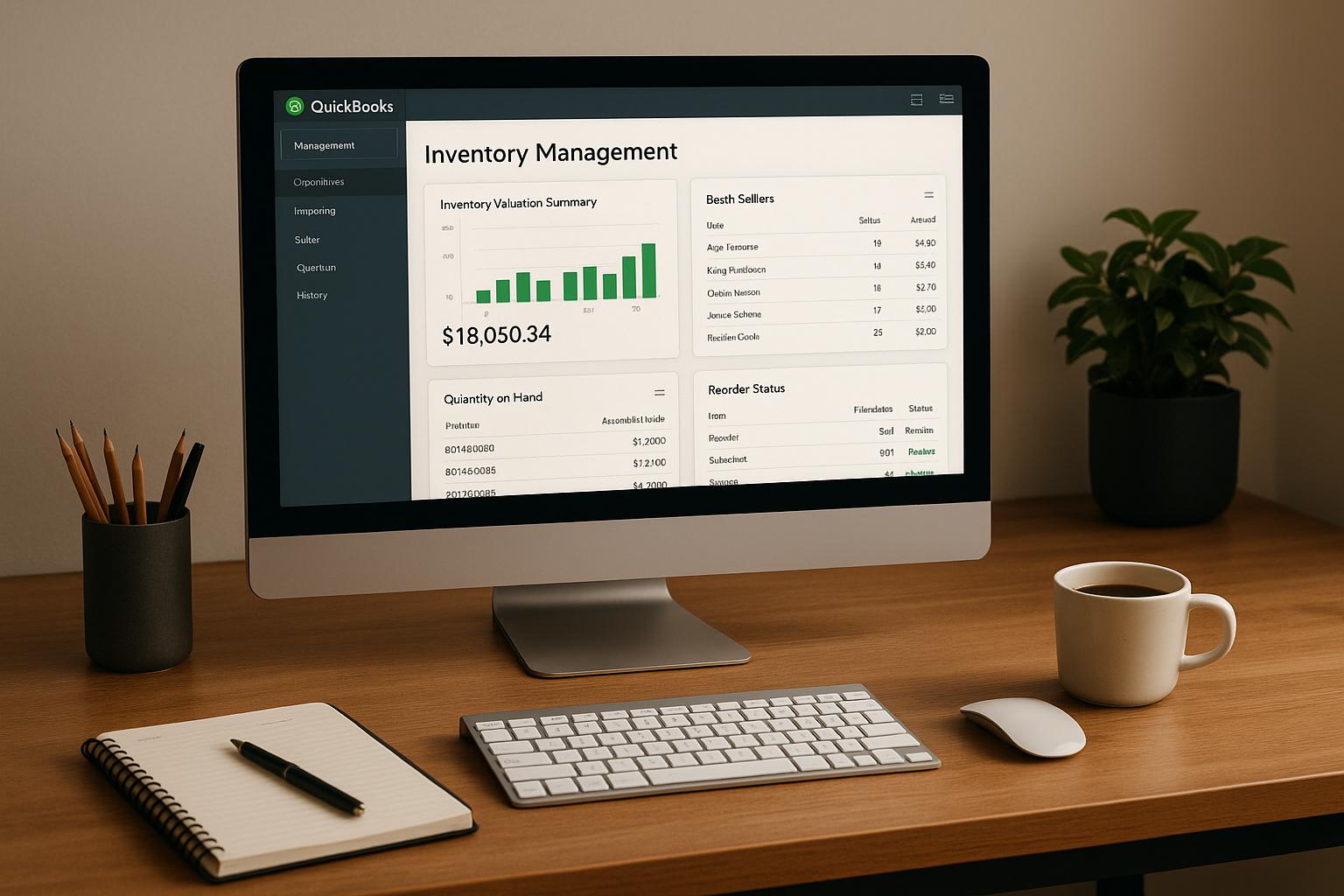
For businesses using tools like QuickBooks Desktop with inventory management add-ons such as Rapid Inventory, tracking space utilization becomes even easier. These tools provide real-time visibility into inventory levels across different storage areas, helping you spot slow-moving products and make smarter decisions about which items to keep.
How It Affects Your Operating Costs
Inefficient space utilization can significantly affect your bottom line. Underused warehouses waste money on rent, utilities, and maintenance for areas that aren’t fully utilized. Surprisingly, many facilities only use about 20% of their total cubic space effectively.
On the other hand, overusing your space can drive up labor costs. For conventional warehouses, exceeding 27% utilization often creates bottlenecks and "dead space" that slow down picking and restocking processes.
"When your warehouse isn't running at peak efficiency, you face extra costs - whether it's paying for unused space or enduring higher labor expenses due to disorganized workflows." - Kyle Letourneau, System Design Director, AutoStore
For conventional setups, the ideal utilization range is typically between 22% and 27%. Staying within this range minimizes wasted space and ensures worker efficiency, directly contributing to profitability.
Here’s how different utilization rates impact operations:
| Utilization Rate | Impact on Operations |
|---|---|
| Under 22% | Excess space goes unused, leading to opportunities for consolidation or subletting. |
| 22% - 27% | Strikes a balance between storage density and worker efficiency. |
| Over 27% | Causes congestion, slows down operations, increases labor costs, and raises safety risks. |
| 85% + | Leads to severe bottlenecks, operational delays, and significant safety hazards. |
The Warehouse Space Utilization Formula
To calculate warehouse space utilization, use this simple formula: (Used Inventory Space ÷ Total Available Warehouse Space) × 100. This gives you the percentage of your warehouse's capacity currently occupied by inventory.
It’s important to ensure both measurements - used and available space - are in the same unit (like cubic feet) for accurate results.
Breaking Down the Formula
The formula includes two key components:
- Used Inventory Space: Also called "inventory cube", this is the total cubic volume occupied by your inventory, which can be tracked using inventory management software. You find it by multiplying the length, width, and height of your stored items or pallets, including the space taken up by racks.
- Total Available Space: Often referred to as "warehouse capacity", this is the usable cubic volume of your warehouse. Start by calculating the total square footage of your warehouse, subtract areas not used for storage, and then multiply by the clear height (the distance from the floor to the lowest overhead obstruction, such as lights or beams).
For example, let’s say you have a 50,000-ft² warehouse with a 24-ft clear height, and 5,000 ft² is used for offices or other non-storage purposes:
(50,000 – 5,000) × 24 = 1,080,000 cubic feet of available space.
If your inventory takes up 240,000 cubic feet, the utilization rate would be:
(240,000 ÷ 1,080,000) × 100 = 22.2%.
This calculation ensures you have a clear understanding of how much of your warehouse’s capacity is being used.
Why Precision Matters
Accurate measurements are essential for this formula to provide meaningful insights. If you rely on total square footage from blueprints without subtracting non-storage areas, your capacity will be overstated. This can make your utilization rate seem lower than it actually is, potentially leading to poor decisions.
"Warehouse space utilization is a measure of how much of a warehouse facility's available storage capacity is being used to hold inventory, goods, or equipment." - Abby Jenkins, Product Marketing Manager, NetSuite
Additionally, measuring to the lowest overhead obstruction ensures your vertical storage calculations are realistic and safe. This allows forklifts to operate properly and pallets to be stacked securely. Skipping these details can result in bad data, which might lead to unnecessary expansions or relocations when reorganizing your current space could solve the problem.
How to Calculate Warehouse Space Utilization

How to Calculate Warehouse Space Utilization in 3 Steps
Here’s a simple guide to calculate your warehouse space utilization in just three steps.
Step 1: Measure Your Total Available Warehouse Space
Start by figuring out the total square footage of your warehouse. You can find this information in your building plans or lease documents. Next, take a walk through your facility and identify areas that aren’t used for storage - like offices, restrooms, loading docks, break rooms, or hallways. Subtract these non-storage areas to determine your usable storage space.
Then, measure the clear height of your warehouse (the distance from the floor to the lowest overhead obstruction). Multiply this height by the usable square footage to calculate your total storage capacity in cubic feet. For instance, if you have 45,000 square feet of usable space and a clear height of 24 feet, your total capacity would be 1,080,000 cubic feet.
Step 2: Calculate the Space Your Inventory Occupies
Now, measure the footprint of each storage area (length × width) and multiply it by the height of the tallest load stored there. Add up all these measurements to get your total inventory cube.
For pallets, you can use a standard measurement: a 48 × 40-inch pallet takes up 13.33 square feet. If you stack pallets, divide the total number of pallets by the stacking height to adjust your calculations accordingly.
Once you’ve determined your inventory cube, you’re ready to calculate your utilization.
Step 3: Use the Formula to Find Your Utilization Rate
Take the total inventory cube you calculated and divide it by your total storage capacity. Then, multiply the result by 100 to get your utilization rate as a percentage.
For example, if your inventory uses 270,000 cubic feet and your total capacity is 1,080,000 cubic feet, the calculation would be:
(270,000 ÷ 1,080,000) × 100 = 25%.
As a general rule, an ideal utilization rate falls between 22% and 27%. If your rate is below 22%, it could mean you’re not using your space efficiently, or your racks aren’t arranged optimally. On the flip side, if your rate exceeds 27%, it might indicate overcrowding, which can slow down processes like picking and restocking.
Prologis emphasizes this point:
"If your storage cube use is higher than 27 percent, you run the risk of high labor costs because workers have less room for tasks"
[Prologis]
Common Measurement Methods for Better Accuracy
To analyze warehouse usage effectively, it's crucial to use targeted measurement techniques. Beyond basic volume calculations, more tailored methods can provide better precision.
Calculating Space by Pallet
If your facility primarily uses pallets for storage, measuring by pallet positions can make calculations more straightforward and precise. A standard U.S. pallet measures 48 x 40 inches, covering approximately 13.33 square feet. This offers a reliable unit for assessing your storage capacity.
When calculating palletized storage, it's important to account for factors like overhang, packaging, and gaps caused by "honeycombing" - those empty spaces in racks where different SKUs can't be mixed in the same lane. By rounding up to the nearest inch, you can avoid overcrowding and get an accurate picture of the space your inventory occupies.
Pallet-based measurements also help highlight inefficiencies like honeycombing, which square footage alone might not reveal. For example, selective racking systems can achieve utilization rates of 90% or more because any empty slot is immediately usable. In contrast, floor-stacked bulk storage often caps at around 60% utilization since entire lanes need to be emptied before restocking with new items.
Using Cubic Space Measurements
While pallet measurements are great for evaluating floor space, cubic measurements provide a more complete picture by factoring in vertical capacity. This method is especially useful in warehouses with high ceilings or vertical racks, where square footage alone might underestimate storage potential.
To calculate cubic capacity, measure the clear height of your facility - that is, the distance to the lowest obstruction such as sprinklers, lights, or beams. Multiply the usable square footage by this clear height to determine total cubic capacity. This approach helps uncover underutilized vertical space that flat measurements might miss.
For high-density storage systems like cube storage or Automated Storage and Retrieval Systems (AS/RS), cubic measurements are particularly important. These systems can cut your warehouse footprint by up to 75% compared to traditional shelving by optimizing vertical storage.
Using these advanced methods can lead to smarter and more efficient warehouse management decisions.
Using Software to Track Warehouse Space Utilization
Keeping track of warehouse space manually can quickly spiral out of control, especially as inventory grows across multiple locations. That’s where modern software steps in, offering real-time visibility into inventory locations and how space is being used.
With software, stock levels are tracked automatically across warehouses and zones. Mobile barcode scanning captures every movement instantly, ensuring items don’t go missing or end up misplaced.
Real-time reporting adds another layer of control. It identifies trends like slow-moving stock or unexpected inventory buildup, allowing you to manage your space more effectively. This shift toward technology is essential for making the most of your warehouse space.
How Rapid Inventory Helps Track Space Utilization

Rapid Inventory is one such platform designed to simplify inventory and space management. Its multi-location tracking feature allows you to monitor inventory across unlimited warehouses, right down to specific bins or zones. This level of detail is critical for calculating how effectively each site is using its space.
The platform also transforms inventory handling with mobile barcode scanning. Using mobile devices, team members can verify locations, items, and quantities during every warehouse task. This approach minimizes errors, ensures items are stored correctly, and reduces wasted space. As Fernanda C, Director of Operations, puts it:
"Rapid Inventory simplifies our warehouse operations with reliable barcode scanning and mobile picking."
Another standout feature is the automatic generation of optimized pick lists. These lists map out the most efficient routes through the warehouse, cutting down travel time and reducing aisle congestion. This not only speeds up order fulfillment but also improves overall workflow.
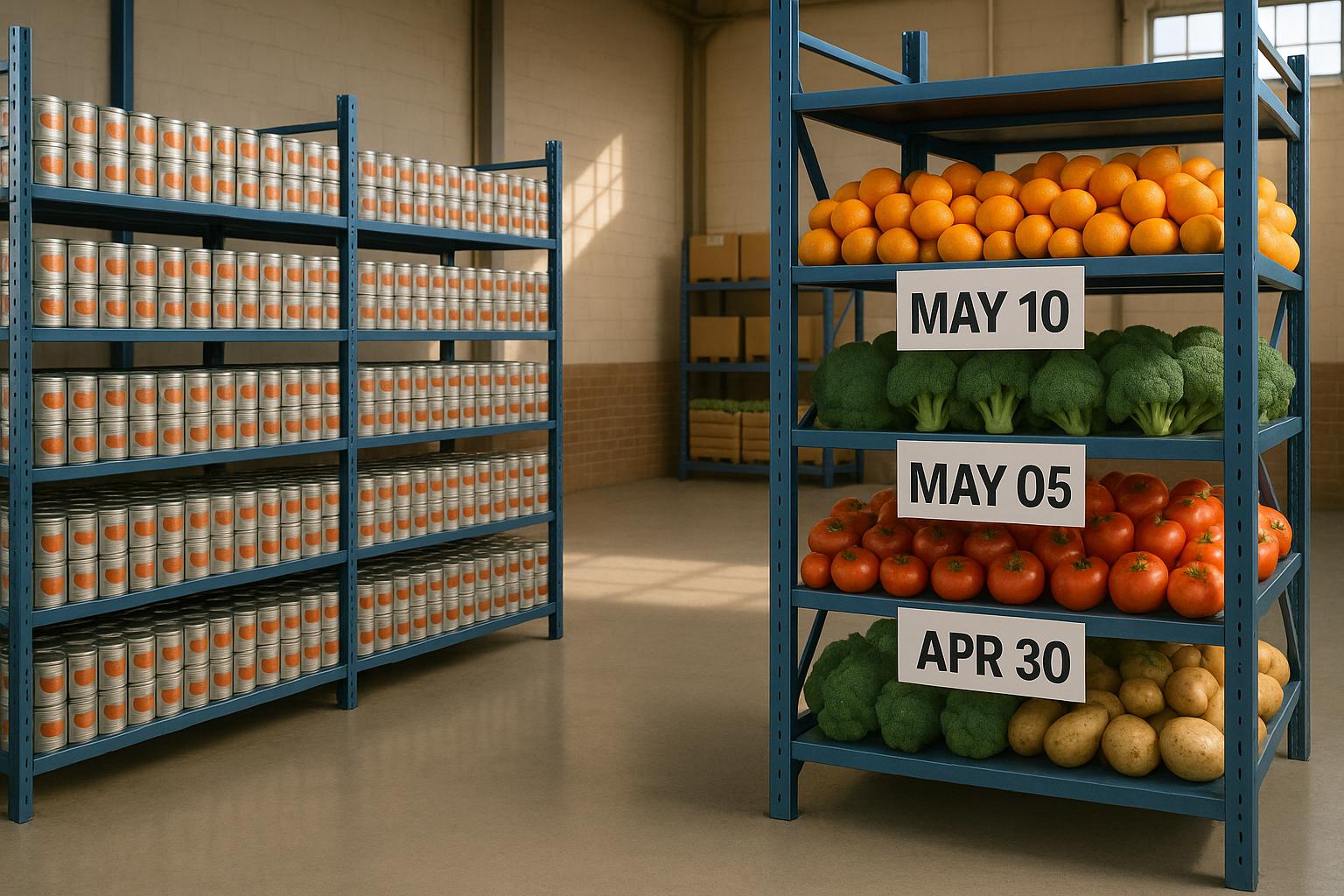
Additionally, the software supports FIFO (First In, First Out) and FEFO (First Expired, First Out) tracking, ensuring older inventory is used first. This prevents expired or outdated stock from piling up and taking up valuable space. With lot and serial number tracking, you maintain full traceability while keeping your warehouse operations lean. Regular cycle counting, enhanced by mobile scanning, can even push inventory accuracy to around 97%.
Real-time reporting tools provide instant updates on inventory levels, purchase and sales orders, and overall stock value. Stock aging reports highlight items that have been sitting too long, helping you move them and maintain an ideal utilization rate of 80% to 85%.
Connecting with QuickBooks Desktop

Rapid Inventory’s integration with QuickBooks Desktop adds another layer of efficiency to warehouse management. The two-way sync works with QuickBooks Desktop Enterprise, Pro, and Premier editions, eliminating the need for duplicate data entry. This keeps your warehouse operations and accounting records perfectly aligned.
For instance, when a sales order is entered into QuickBooks, it instantly appears in Rapid Inventory for picking and fulfillment. Similarly, purchase orders update in both systems at the same time, reducing the risk of over-ordering and wasted space. The platform’s web-based accessibility means you can check warehouse data and reports from anywhere while staying synced with your local QuickBooks installation.
The implementation process is quick and straightforward - most businesses are up and running in just 6–7 days, including data migration and team training. Jacob, a CEO who uses Rapid Inventory, shares his experience:
"My team was up and running in a few days. Very straightforward and easy to use."
To make things even easier, the platform includes free training, onboarding, and support. It also offers white-glove migration services, valued at $1,500, at no extra cost.
Conclusion
This guide has outlined the key steps and methods to evaluate your warehouse's space utilization effectively. Understanding and optimizing space usage isn’t just about crunching numbers - it’s a strategic move to cut costs and improve efficiency. For context, warehouse facility costs in the U.S. increased by 8.3%, rising from $7.96 per square foot in 2022 to $8.31 in 2024. By knowing exactly how much space is being used, you can reduce expenses tied to unused areas while ensuring employees have enough room to work safely and efficiently.
The calculation itself is simple: divide the occupied inventory volume by the total warehouse volume, then multiply by 100. Staying within an optimal utilization range is crucial for maintaining both efficiency and safety.
Modern tools make this process much easier. Instead of manually measuring dimensions for countless SKUs, software solutions now offer real-time insights into space usage. For instance, Rapid Inventory provides features like multi-location tracking, mobile barcode scanning, and real-time reporting. These tools eliminate guesswork and integrate seamlessly with platforms like QuickBooks Desktop, helping you align warehouse data with financial records for better forecasting and inventory control.
Start by evaluating your current space utilization and commit to periodic audits and smarter slotting practices. By adopting continuous improvement strategies and leveraging tools like Rapid Inventory, you can make the most of every square foot while keeping operations smooth and efficient.
FAQs
Should I measure utilization in cubic feet or pallet positions?
When deciding between the two, it comes down to what you’re focusing on. Cubic feet works best when you need to assess overall space usage or calculate total storage capacity. On the other hand, pallet positions are more practical for managing inventory, particularly when dealing with palletized goods. Think of cubic feet as a way to measure the big picture and pallet positions as a tool for streamlining daily operations.
What areas should I exclude from total warehouse space?
To determine usable warehouse space, exclude areas that are not designated for storage. This includes spaces like offices, restrooms, loading docks, safety zones, and any overhead obstructions. Additionally, remove specialty areas such as cold storage zones and spaces reserved for safety signage or other non-storage purposes. By doing so, you’ll get a precise measurement of the warehouse's actual storage capacity.
How often should I recalculate space utilization?
To keep your warehouse running efficiently and manage costs, it's a good idea to recalculate space utilization on a regular basis. While the timing can depend on your specific operations, a review at least every quarter is a solid starting point. Additionally, take another look whenever there are major shifts - like changes in inventory levels, layout adjustments, or operational updates. Staying on top of this data ensures your storage remains optimized and ready to handle evolving demands.