The way you design your warehouse layout can significantly impact both productivity and safety. A poor layout leads to accidents, congestion, and inefficiencies, while a well-planned design reduces risks and boosts operations with inventory management software.
Key takeaways:
- Injury Risks: In 2022, the U.S. reported 5.5 injuries per 100 workers in warehousing, with 24,960 forklift-related accidents.
- Optimal Space Use: Allocate 55-70% of space to racking and 30-45% to aisles to avoid congestion and hazards.
- Traffic Management: Use one-way lanes, cross-aisles, and clear markings to prevent collisions.
- OSHA Compliance: Follow regulations like proper aisle widths, load limits, and anchored racking to ensure safety.
- Efficiency Boosts: Position fast-moving items near shipping areas and use vertical storage to save time and space.
Balancing safety and productivity starts with careful planning - separating pedestrian zones, maintaining clear aisles, and adhering to safety standards can prevent costly accidents while improving daily workflows.
1. Layout Design Priorities
Space Utilization
Making the most of your warehouse space means finding the right balance between storage and safety. Typically, warehouses allocate 55%–70% of their space for racking and 30%–45% for aisles and staging areas. Deviating from these proportions can lead to wasted space or hazardous congestion.
Using vertical storage, like high-rise racks and mezzanines, can boost capacity significantly. However, always check your floor’s load ratings, as support columns or low ceilings can reduce usable space by 10%–25%. Overloading these areas isn't just risky - it can result in structural collapses.
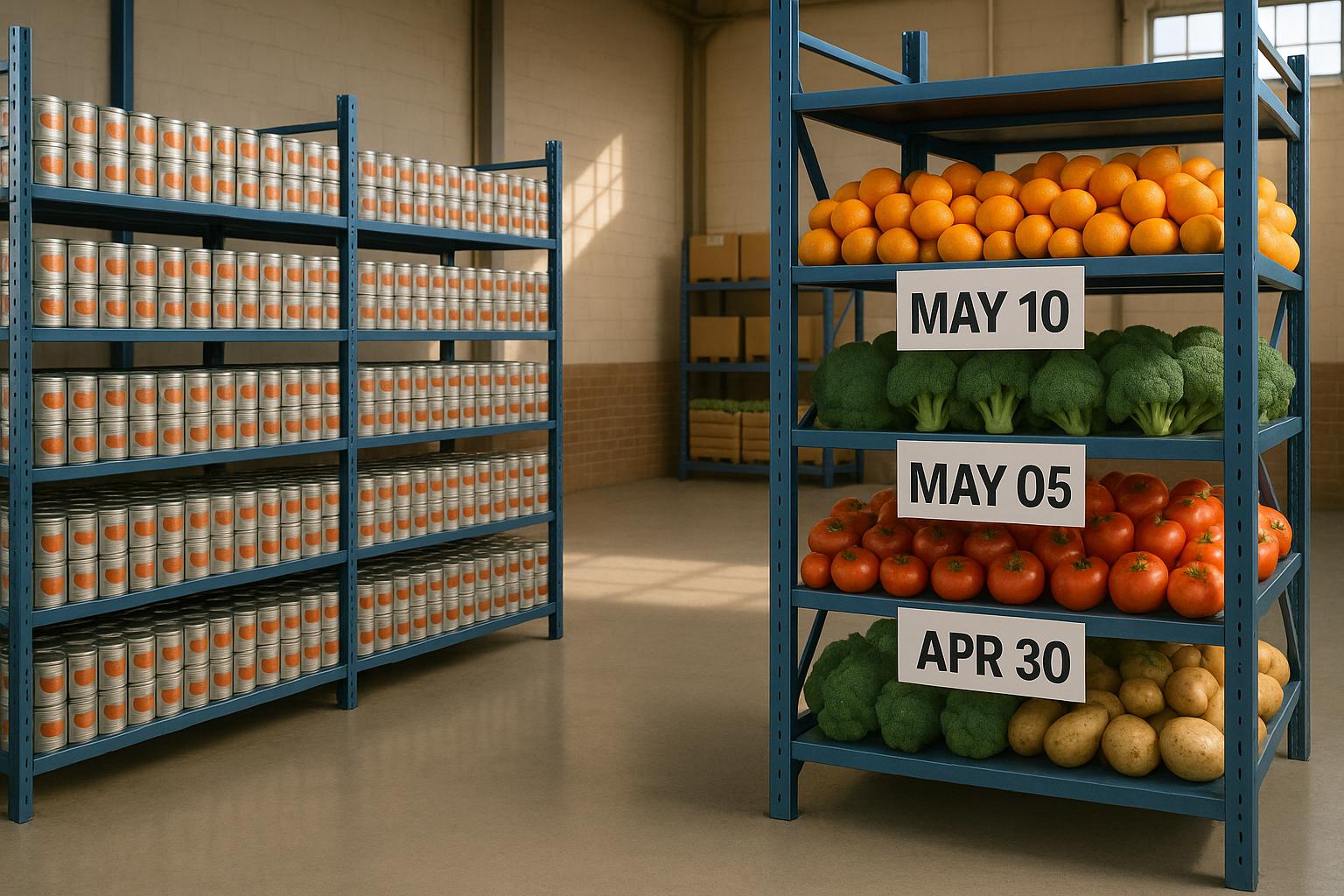
Strategic slotting can also make a big difference. By placing fast-moving "A" items near shipping and receiving zones, you can cut travel time and reduce collision risks. Don’t forget about flue spaces - these gaps between pallets and rows are critical for fire safety and sprinkler effectiveness. Ensure at least 18 inches of clearance (or 36 inches for ESFR systems) between the top of stored goods and sprinkler deflectors.
These storage methods lay the groundwork for smoother operations, which ties directly into traffic flow management.
Traffic Flow and Congestion
Poor traffic patterns can lead to bottlenecks and accidents. Choosing a layout - whether U-shaped, L-shaped, or I-shaped - should depend on your operational needs and volume.
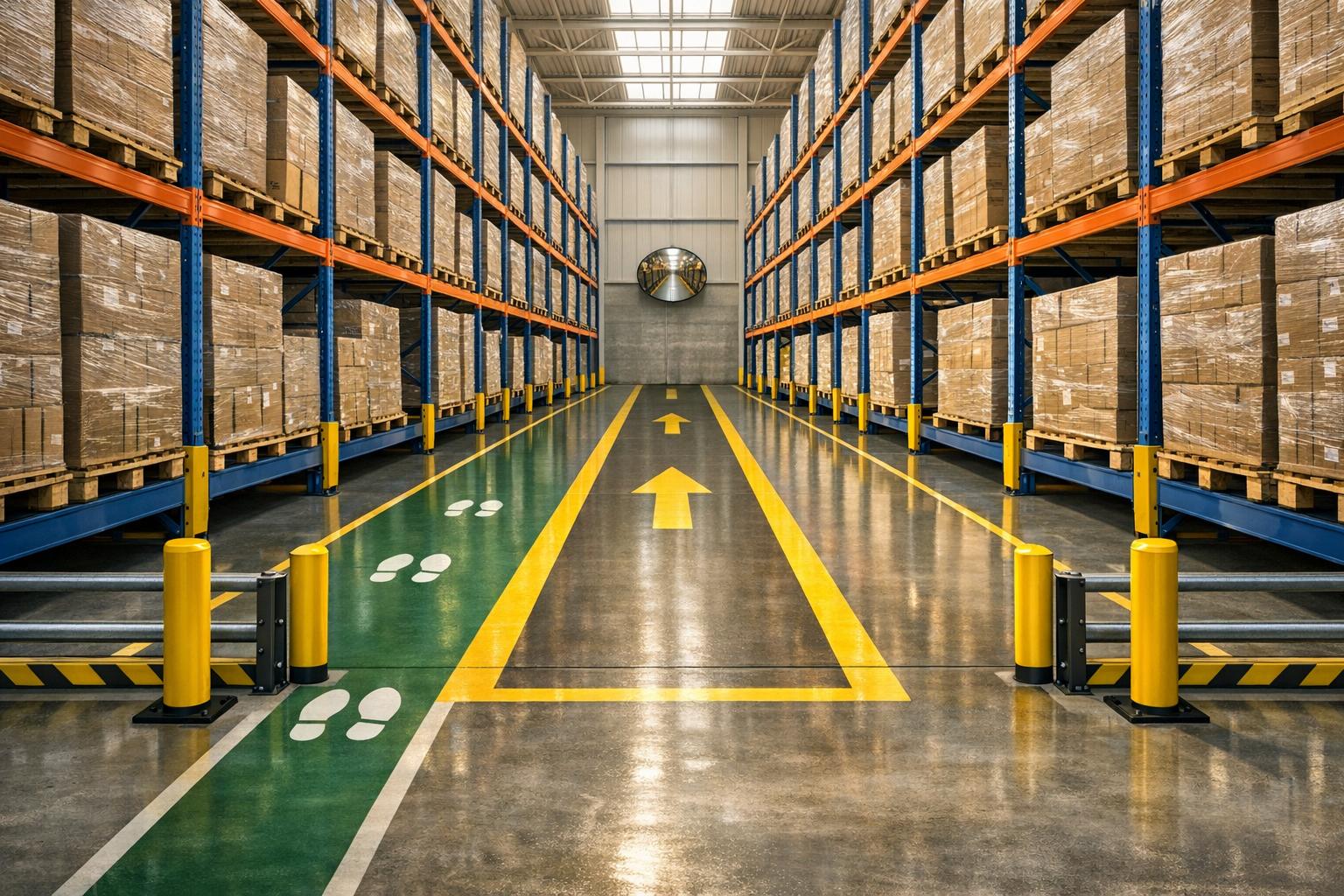
One-way lanes can help avoid head-on collisions, while cross-aisles offer alternative routes to ease congestion. Clearly marked pedestrian walkways, guardrails, and color-coded tape are essential for keeping foot traffic safe and separate from equipment paths. Charging and fueling stations should be placed in out-of-the-way locations to minimize disruptions in high-traffic areas.
Good visibility is just as important. Mirrors at blind corners and intersections allow operators to see oncoming traffic, while proper lighting and bold signage reduce confusion and enhance safety.
By focusing on traffic flow, you not only improve efficiency but also align with OSHA’s safety recommendations.
Compliance with OSHA Standards
OSHA regulations emphasize safety measures like clear aisles, visible markings, and proper signage to avoid hazards. To protect workers and maintain racking integrity, use handrails, guardrails, and rack guards.
Each racking section should display a Load Application and Rack Configuration (LARC) plaque showing its load capacity. This prevents overloading, a major cause of rack failures. Additionally, all racking uprights must be anchored to the floor to meet seismic and stability requirements.
With OSHA’s National Emphasis Program increasing inspections on material handling operations, it’s more important than ever to get these details right. Regular risk assessments can help identify tripping hazards, blind spots, and areas where pedestrian and vehicle paths overlap.
Operational Efficiency
Once your space and traffic strategies are in place, fine-tuning aisle widths and equipment placement can further boost productivity and safety. Different equipment types require different aisle widths:
| Equipment Type | Typical Required Aisle Width |
|---|---|
| Counterbalance Forklift | 12–13 feet |
| Reach Truck | 8.5–10 feet |
| VNA / Turret Truck | 6–7 feet |
While narrower aisles can increase storage density, they demand specialized equipment and precise handling. On the other hand, wider aisles may reduce storage but enable faster and safer movement. Always store heavy items on lower levels to minimize forklift strain and prevent tip-overs. And, of course, keep emergency exits and fire suppression equipment completely accessible - not only for safety but because it’s legally required.
sbb-itb-19ed50f
2. Safety Requirements and Improvements
Traffic Flow and Congestion
Congestion doesn't just slow things down - it directly impacts safety. In 2022, the Bureau of Labor Statistics reported 24,960 forklift accident cases that led to days off work or job restrictions. Interestingly, many of these accidents weren't caused by reckless behavior but by poor design, like narrow aisles or limited visibility.
To tackle this, separating pedestrian zones from vehicle lanes is essential. Tools like virtual walkway projectors and color-coded zones (red for vehicles, green for pedestrians, yellow for staging) help keep traffic types apart. Adding buffer zones near loading docks can prevent bottlenecks during busy times, while maintaining bidirectional vehicle lanes of at least 12 feet wide reduces the risk of head-on collisions.
"A well-planned layout is a practical method for preventing unnecessary hazards"
– Brian Lyle, Logimate
These improvements not only enhance safety but also align with OSHA's regulatory guidelines.
Compliance with OSHA Standards
Design upgrades alone aren't enough - meeting OSHA standards ensures that every element works to protect employees. Under OSHA's General Duty Clause, employers must maintain a workplace free from recognized hazards, which includes addressing damaged or overloaded pallet racks. Specific regulations, like OSHA 1910.176, require storage areas to be free of hazards and materials to be secured to prevent sliding or collapsing. Meanwhile, OSHA 1910.22 mandates that aisles and passageways remain clear and in good condition.
Key steps to compliance include:
- Installing visible placards to display maximum load capacities on racks.
- Anchoring rack columns securely to the floor to prevent tipping.
- Conducting monthly inspections and annual walk-throughs to identify issues like bent beams or loose anchors.
- Keeping detailed records of inspections, repairs, and employee training for at least 12 months to ensure readiness for audits.
These measures not only meet OSHA requirements but also create a safer, more reliable work environment.
Operational Efficiency
Safety upgrades don't have to slow things down - in fact, they can boost productivity. Vertical storage and high-density racking systems can increase storage capacity by 20–40% without taking up more space. Strategic slotting, like placing fast-moving "A-items" closer to packing and shipping areas, reduces travel time and minimizes the chance of collisions between workers and equipment.
Additional tools like rack guards, end-of-row protectors, and netting prevent inventory collapses and damage. Ergonomic solutions, such as height-adjustable benches and lift assists, help reduce strain on workers, improving both accuracy and long-term productivity. Applying the 5S methodology - Sort, Set in Order, Shine, Standardize, Sustain - eliminates clutter, reduces trip hazards, and streamlines workflow.
"Safety isn't the opposite of productivity - it's the foundation of it"
– FHI Works
Top Warehouse Policies & Procedures: Safety, Efficiency, & Compliance
Pros and Cons

Warehouse Layout Comparison: Space Utilization vs Safety Trade-offs
Every warehouse layout involves a balancing act between storage capacity, accessibility, and safety. High-density systems can maximize storage but often require costly, specialized equipment. For example, Very Narrow Aisle (VNA) configurations shrink aisle widths to just 6–7 feet, allowing for more storage space. However, they rely on specialized turret trucks and wire-guided navigation systems, which can drive up costs.
Meanwhile, Selective Racking prioritizes full pallet accessibility and supports smooth, bidirectional traffic in 12-foot aisles. This layout, while less dense, uses more floor space and might require a larger facility - leading to increased real estate expenses. On the upside, it simplifies OSHA compliance, keeps emergency exits clear, and allows teams to operate standard forklifts without extra training or equipment costs .
Here’s a quick comparison of common layout approaches:
| Layout Approach | Space Utilization | Traffic Patterns | OSHA/Code Compliance | Operational Efficiency |
|---|---|---|---|---|
| Selective Racking | Low (needs 12-ft aisles) | Smooth; high accessibility | High; easy to maintain egress widths | High for picking; low for storage density |
| Drive-In Racking | High (LIFO density) | Congested; requires specialized trucks | Moderate; strict weight/load marking | High for bulk; low for SKU variety |
| VNA (Very Narrow Aisle) | Maximum (6–7-ft aisles) | Restricted; requires wire/rail guidance | High; requires very flat floors (F-min) | High cube utilization; expensive equipment |
These differences highlight the importance of finding a layout that balances operational efficiency with safety and compliance.
Focusing solely on space efficiency can increase risks. Narrow aisles and vertical storage expansion without proper engineering can obstruct fire suppression systems and emergency exits, leading to potential code violations. Additionally, structural factors like support columns or low ceilings can reduce theoretical storage efficiency by 10–25%.
"While efficiency is a vital aspect of warehouse operations, it should not come at the cost of safety." – Alex Selwitz, Director of SEO, Red Stag Fulfillment
A well-planned warehouse typically allocates 55–70% of space to racking and 30–45% to aisles and staging, striking a balance between safety and optimized use of space. To further ensure safety, installing rack guards, maintaining proper flue spaces (18–36 inches below sprinkler deflectors), and conducting regular inspections can help prevent accidents, downtime, and costly citations . Ultimately, striking this balance is essential for creating a warehouse that operates efficiently while remaining compliant.
Conclusion
Warehouse layout and safety go hand in hand to create an efficient and hazard-free workspace. A carefully planned layout helps cut down on clutter, reduces congestion, and shortens travel time - all of which improve both operational efficiency and worker safety.
Start with a thorough risk assessment to pinpoint high-risk areas before finalizing your layout. Incorporate floor markings and physical barriers to separate pedestrian walkways from forklift zones, and install rack guards and bollards early to avoid expensive retrofits later. Position fast-moving SKUs near shipping and receiving areas to cut down on unnecessary equipment movement and labor costs. These initial steps lay a solid foundation for integrating technology to enhance safety and efficiency.
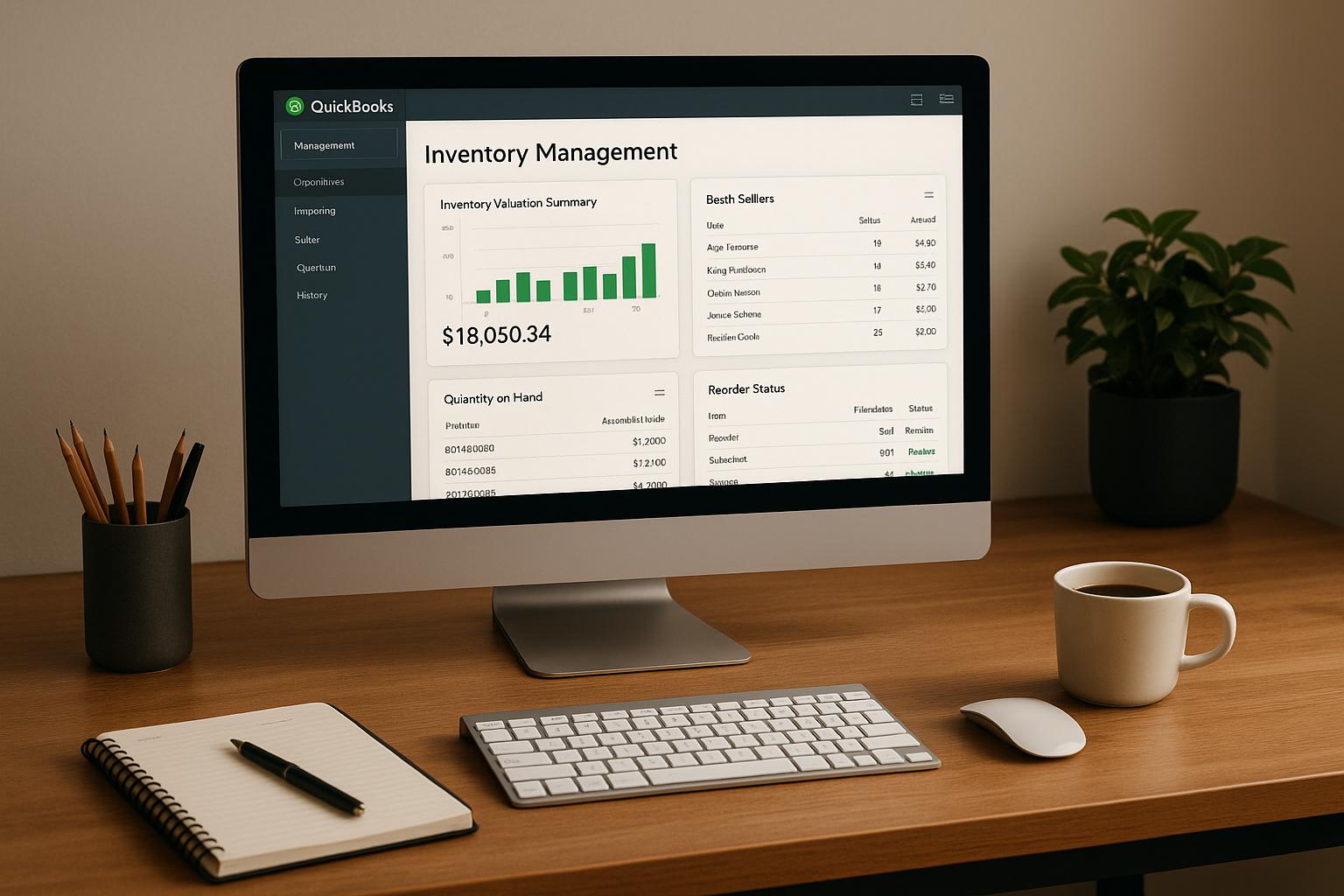
Technology plays a key role in complementing these design strategies. Digital twins, for example, allow you to simulate material flow and identify bottlenecks before making physical changes. Tools like Rapid Inventory can take this a step further by tracking inventory placement across multiple locations, monitoring load capacities, and optimizing slotting to reduce hazardous travel paths. Features like real-time visibility and QuickBooks sync ensure inventory decisions align seamlessly with safety measures and operational goals. Combining these digital tools with thoughtful physical design strengthens overall warehouse performance.
Lastly, don’t overlook the importance of maintaining proper flue spaces - 18 inches for standard sprinklers and 36 inches for ESFR systems - and conduct regular inspections to stay compliant and prevent accidents. Involve operations managers, safety officers, and frontline workers early in the planning process to avoid creating layouts that are impractical for daily use.
"A well-structured, planned layout can boost operational efficiency and productivity while mitigating potential safety hazards – a win-win scenario for all stakeholders." – Alex Selwitz, Director of SEO, Red Stag Fulfillment
FAQs
How do I choose the right aisle width for my forklifts?
To determine the appropriate aisle width, focus on safety guidelines and efficiency in operations. OSHA recommends a minimum of 36 inches for pedestrian pathways and 48 inches for standard forklift usage. Additionally, ensure your aisles are at least 3 feet wider than the largest forklift in use to allow for safe navigation. Consider factors like the type of forklift, its turning radius, and the specific needs of your warehouse to maintain safety, reduce accidents, and optimize storage space.
What’s the fastest way to reduce forklift-pedestrian close calls?
The fastest way to reduce forklift-pedestrian near-misses is by putting clear separation measures and physical controls in place. Some effective steps include setting up designated pedestrian walkways, clearly marking lanes, adding stop signs at key areas, and ensuring safe distances are maintained. On top of that, improving warehouse layouts and creating traffic management plans to keep forklift and pedestrian routes separate can go a long way in boosting safety and cutting down risks in warehouse operations.
How can I validate a new layout before moving racks or inventory?
To ensure your new warehouse layout works effectively, begin by mapping out your workflow. This helps pinpoint potential problem areas and ensures space is used efficiently. Track how tasks move through each stage - receiving, storage, picking, packing, and shipping - while factoring in order profiles and the equipment involved.
Next, create a scaled floor plan. This will help you visualize critical elements like aisle widths, designated zones, and possible bottlenecks. It’s also a good idea to consult with rack specialists to prioritize safety and make the most of your space, preventing expensive changes down the line.