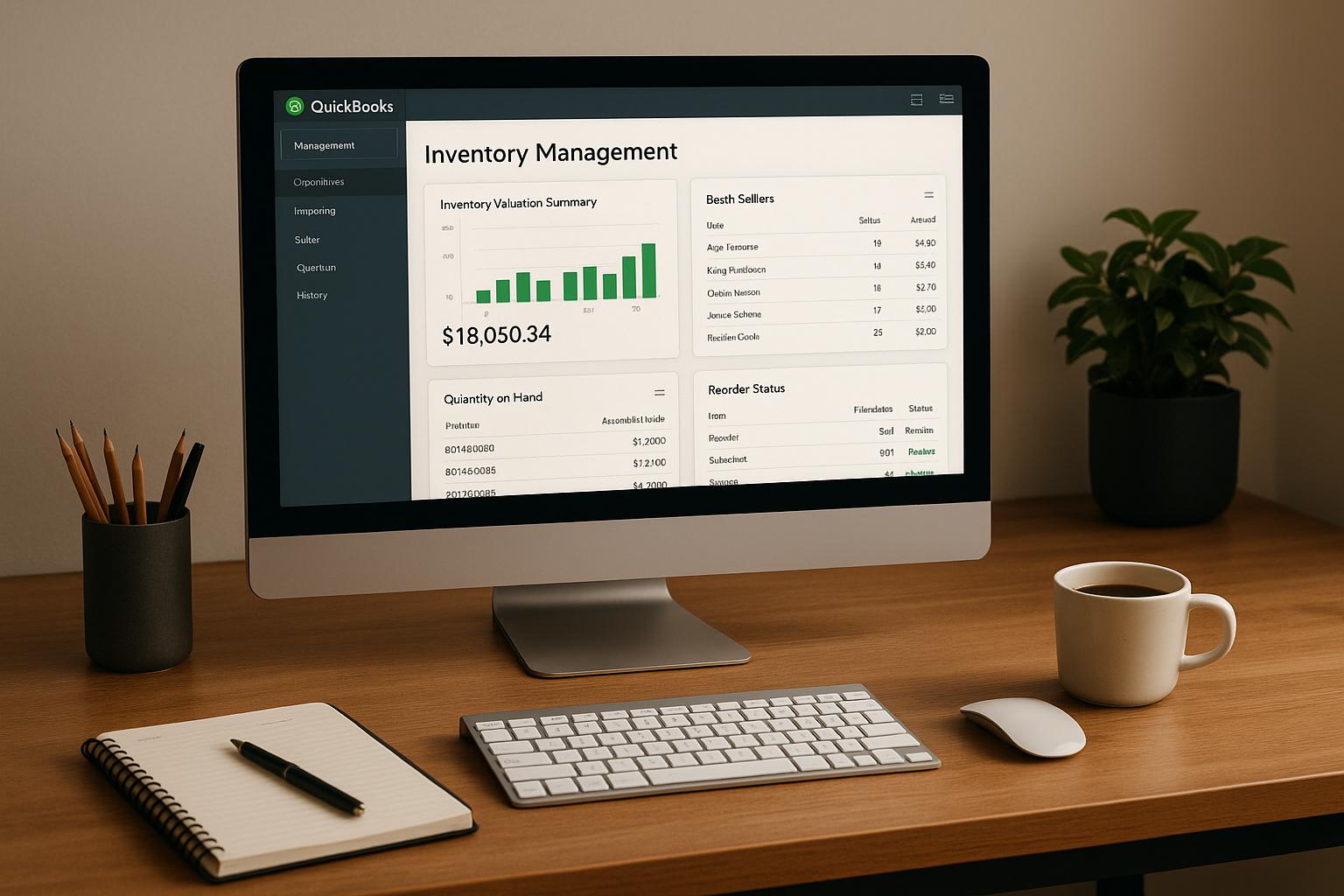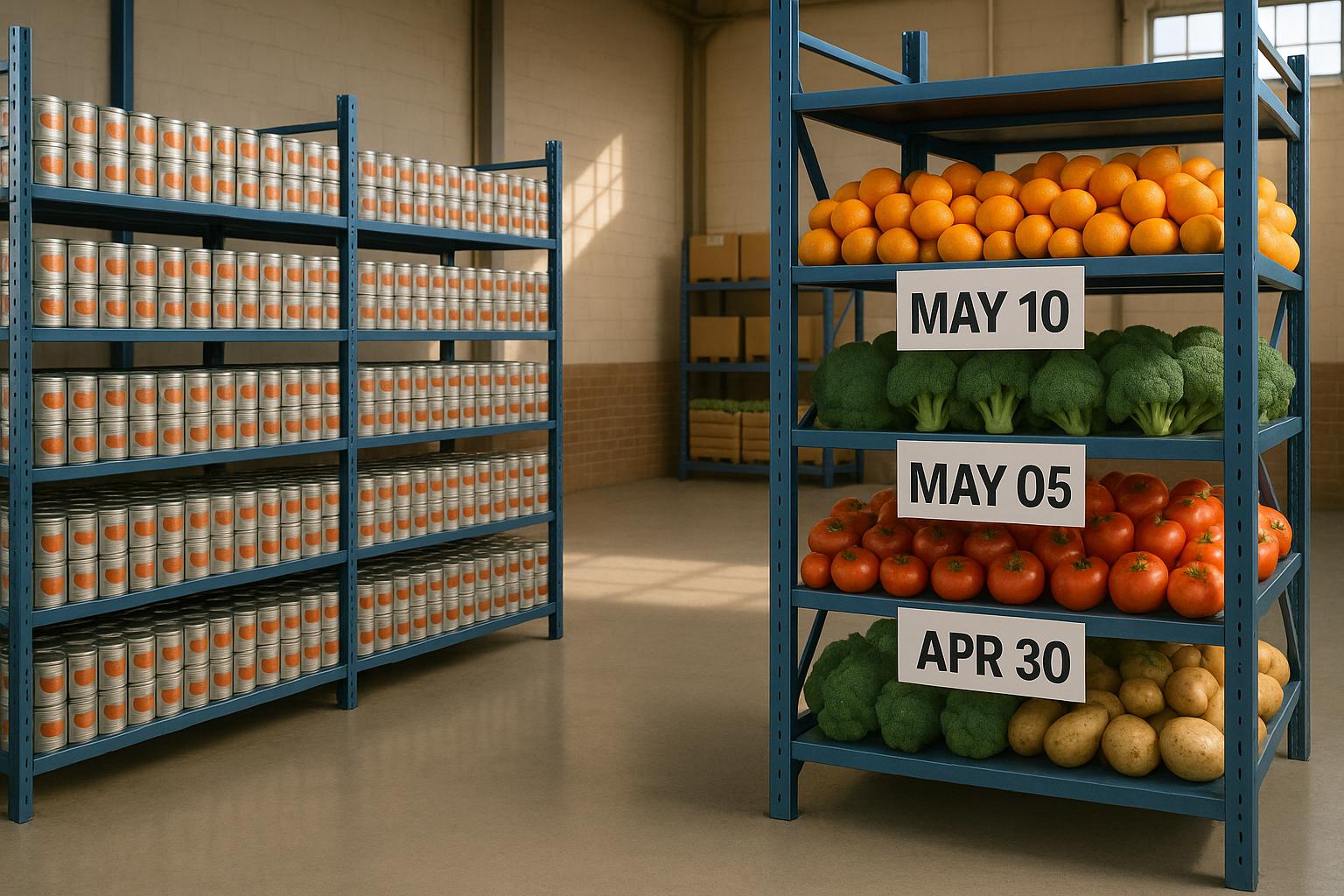

Inventory staging areas are critical for managing goods efficiently in warehouses. They act as temporary zones for receiving, processing, and dispatching items, directly affecting accuracy and speed. Poor design leads to bottlenecks, errors, and inefficiencies, but proper planning can significantly improve operations.
Key Takeaways:
- Location matters: Place staging areas near docks and high-traffic zones to minimize handling time.
- Organized layouts: Use clear zones for receiving, processing, and shipping. Mark aisles and pathways for safety.
- Essential tools: Equip areas with barcode scanners, mobile workstations, and proper shelving.
- Safety first: Follow OSHA guidelines for lighting, ventilation, and forklift operations to protect workers.
- Technology integration: Tools like QuickBooks and Rapid Inventory simplify tracking, improve accuracy, and reduce errors.
Pro Tip: Regular audits, cycle counts, and clear workflows ensure staging areas remain efficient and compliant over time. By combining proper layout, equipment, and technology, you can streamline operations and reduce inventory errors by over 80%.

Complete Warehouse Staging Area Setup Checklist - 4 Phase Implementation Guide
Preparation Steps for Staging Areas
Assess Warehouse Space and Inventory Needs
Start by measuring your warehouse dimensions, including ceiling height, to evaluate how much vertical stacking is possible. Take note of any obstructions like columns, sprinklers, HVAC systems, heaters, fans, or support beams that could limit usable space or disrupt traffic flow.
Place staging areas close to loading dock doors or receiving bays to cut down on handling time and reduce labor costs. It’s also important to estimate the average shipment size and volume, especially during peak times, to ensure the staging area can handle the load without causing bottlenecks. With real estate rents climbing, making the most of your space is more important than ever.
To test efficiency, tape off staging areas and traffic lanes. This helps visualize the flow of movement and pinpoint congestion issues. Make sure there’s enough clearance for forklifts and pallet jacks to move freely. Tools like QuickBooks Enterprise’s "Advanced Inventory" settings can help you track inventory across multiple locations, including staging areas, ensuring real-time accuracy during setup.
This preparation sets the stage for a smooth and effective inventory audit.
Conduct an Inventory Audit
Once you’ve assessed your space, the next step is an inventory audit to align inventory flow with staging requirements. Focus on identifying fast-moving items that need to be positioned in prime staging spots. Use an ABC Analysis to organize stock into three groups: Group A for high-value, fast-moving items; Group B for mid-tier items; and Group C for low-value, slow-moving stock. This analysis helps you determine how much square footage is necessary by comparing physical inventory counts with forecasted needs.
Slotting and barcode scanning can further streamline the process by grouping inventory based on size, weight, and order speed. This ensures that heavy and bulk items are handled efficiently. Regular cycle counting keeps inventory data up-to-date, allowing you to adjust staging requirements throughout the year instead of waiting for an annual review.
Designing the Layout of Staging Areas
Choose a Central, Accessible Location
Place staging areas close to receiving docks and shipping zones to streamline product movement. Inbound staging should sit near the main storage area for faster put-away, while outbound staging should be positioned near packing and shipping zones. Since travel time can account for up to 50% of total picking time, focus on positioning the 20% of SKUs responsible for 80% of activity near the shipping doors. Use floor tape to mark boundaries and simulate forklift routes to ensure proper clearance. Adjust the layout - whether U-shaped, I-shaped, or L-shaped - to separate inbound and outbound flows and avoid unnecessary backtracking.
Once the staging area is centrally located, break it into zones for specific processes.
Organize Zones for Different Processes
Divide the staging area into distinct zones: Receiving, Staging, Processing, and Put-Away. Place high-velocity (or 'A') items in the most accessible areas to enhance efficiency. A clear layout is especially important when managing a high volume of SKUs. Include dedicated spaces for mobile equipment storage, packing stations, and office areas for handling documentation. Store fast-moving items at waist-to-eye level - known as the "golden zone" - to minimize worker strain, and place heavier items on lower shelves. Reserve flexible space to handle returns and allow for growth, aiming for 80–85% capacity utilization to prevent overcrowding.
Ensure Clear Aisles and Marked Boundaries
Use high-visibility tape to designate work areas, travel paths, staging zones, and restricted spaces. Create separate pathways for pedestrians and forklifts to reduce accidents and delays. Aisle widths should accommodate the turning radius of forklifts and pallet jacks, ensuring smooth maneuverability. One-way aisles marked with color-coded indicators can further improve traffic flow. Follow 5S principles to keep pathways safe and free of clutter. Add clear signage to highlight overhead clearances, emergency exits, and hazardous material zones. Warehouses that adopt structured receiving protocols through dedicated management systems have been shown to reduce errors by 80% or more.
How To Layout Your Warehouse Locations | Warehouse Management
Equipment and Tools for Staging Areas
Once your staging area's layout is sorted, the next step is to outfit it with the right equipment and safety tools to keep things running smoothly.
Install Shelving and Pallets
Start with standard pallet racks to ensure easy access in high-turnover facilities. Arrange racks in long rows rather than shorter sections to make the best use of floor space - an "L" shape layout can waste around 5% of usable space. For safety, always store heavier items on the lower shelves and lighter ones on top to avoid creating a top-heavy system.
If you’re storing multiple pallets of the same SKU, consider deep lane pallet racking systems like gravity flow, drive-in, or automated shuttles for better storage density. For long or bulky items like lumber or piping, cantilever racks are ideal. Additionally, moveable pallet racks can almost double storage capacity by removing the need for fixed aisle space.
"Plan your layout! Don't just wander in and start throwing pallet racking here and there based upon whim and sudden desire." - Chance Cook, Jorgensen Material Handling
Instead of expanding your facility horizontally, think vertically. Use the "clear stack height", which is the space between the floor and the lowest overhead obstruction. Keep in mind that building codes usually require an 18" to 36" clearance below sprinkler heads. Also, ensure the warehouse floor is level and in good condition to avoid wear and tear on equipment and prevent inventory damage.
Provide Barcode Scanners and Mobile Carts
Equip your staging areas with handheld mobile computers for tasks like barcode scanning, label printing, and real-time inventory updates. For elevated racks, use long-range scanners that can read barcodes from distances of up to 50 feet, reducing the need for ladders during scanning. Battery-powered mobile workstations are another great tool, allowing employees to update inventory records and print labels directly in the staging area, cutting down on trips to stationary desks.
"Mobile workstations enable real-time barcode scanning, inventory record updates, and labeling directly in the inventory processing area, eliminating the need for frequent trips to stationary workstations." - Rafael Gonzalez, QMH Inc.
A barcode system can boost inventory tracking accuracy to as much as 97%. To support this, place wireless access points strategically in staging and receiving areas to ensure scanners stay connected to your central database. For QuickBooks Desktop users, tools like Rapid Inventory (https://rapidinventory.com) can sync mobile barcode scanning with QuickBooks, offering instant inventory visibility across locations. When choosing mobile hardware, check battery life and charging options to ensure devices can last through demanding shifts.
Add Safety and Compliance Equipment
Safety is just as important as efficiency. Install essentials like emergency exit signs, fire extinguishers, smoke detectors, and barriers to prevent falls in areas with floor or wall openings. Set up PPE stations stocked with hard hats, high-visibility jackets, safety glasses, steel-toe boots, and gloves tailored to specific tasks. Use tape or paint to clearly mark zones for receiving, hazardous materials, and pedestrian-only lanes to reduce traffic-related risks.
"Safeguarding employees is not only a legal requirement but a fundamental necessity for maintaining an efficient and productive workplace." - Tony Hysell, Quality Material Handling Inc.
Clearly display weight limits on all racks and shelving units to prevent overloading. Place anti-fatigue mats in areas where employees stand for long periods, and ensure first aid kits are fully stocked and easily accessible. Since human error is responsible for 62% of fulfillment issues, proper safety equipment and clear signage are essential for minimizing accidents. Regularly audit your staging areas - daily or weekly for quick fixes and annually for a more thorough review - to keep safety standards high.
sbb-itb-19ed50f
Setting Up Workflows and Processes
Creating workflows that promote consistent and accurate operations is essential for smooth warehouse management, regardless of the shift.
Set Up Receiving Protocols
Start with Advance Shipment Notices (ASN) to prepare staging lanes, labor, and equipment before trucks arrive. Once pallets are unloaded, organize them into staging lanes clearly marked by Purchase Order (PO) or ASN to avoid dock congestion. Cross-check the Bill of Lading (BOL), PO, and packing list against the physical goods, and document any Overages, Shortages, and Damages (OS&D).
Equip your team with mobile scanners to verify every unit, lot, and serial number. For better accuracy, consider using blind counts. If you're handling perishables, check temperature logs and expiration dates to align with First-Expired, First-Out (FEFO) picking strategies. Update your system in real time to make inventory visible for immediate fulfillment. At the staging point, apply internal barcodes before moving items to storage.
"Receiving isn't just the first step - it's the control point that decides how the next 48 hours of operations will perform." - Team Hopstack
Receiving errors account for 40% to 60% of downstream warehouse issues, but structured receiving protocols can reduce inventory errors by over 80%. High-performing warehouses aim for at least 98% receiving accuracy. For smaller e-commerce setups, aim for dock-to-stock times under 24 hours, with priority items processed in under 4 hours.
Once receiving is under control, focus on standardizing picking and packing processes.
Standardize Picking and Packing Procedures
Develop clear, step-by-step instructions for inspecting, documenting, and storing items. A "label-then-locate" process works well - label all received items with internal barcodes before assigning storage locations to prevent staging delays. Mobile workstations can make barcode scanning and labeling more efficient by reducing unnecessary trips to stationary desks.
Introduce risk-based quality control: perform 100% checks on new suppliers or sensitive SKUs, while using sample-based checks for trusted, reliable vendors. Keep workflows streamlined by using clearly marked lanes and zones.
With picking and packing standardized, the next step is to maintain accuracy through regular cycle counts and quality checks.
Integrate Cycle Counting and Quality Checks
Schedule cycle counts using ABC analysis: count A-items daily or weekly, B-items weekly or monthly, and C-items monthly or quarterly. Update your system immediately when new storage locations are confirmed to maintain inventory traceability. For OS&D issues, require photo documentation and specific reason codes to resolve disputes quickly.
Set dollar-value thresholds (e.g., over $1,000) that require financial approval before finalizing inventory adjustments. For every discrepancy found during a cycle count, document a root-cause code (e.g., "mislabeling" or "short-shipment") to support continuous improvement. High-performing warehouses aim for an Inventory Record Accuracy (IRA) of at least 97%, with random inbound/outbound audits keeping variance under 0.25%.
Using QuickBooks and Rapid Inventory Integration
Integrating QuickBooks Desktop with Rapid Inventory can help you keep your inventory data up-to-date and accurate in real-time. This two-way sync ensures that every transfer, count, and adjustment in your staging areas is automatically reflected in your accounting records. By connecting these tools, you can streamline your workflows and improve efficiency across your operations.
Enable Multi-Location Tracking
If you want to track your staging areas as separate locations, you’ll need QuickBooks Desktop Enterprise Platinum or Diamond editions with Advanced Inventory enabled. Start by switching to Single-User Mode in QuickBooks, then navigate to Edit > Preferences > Items & Inventory > Company Preferences. Make sure "Inventory and purchase orders are active" is checked. Next, go to the Advanced Inventory Settings and turn on Multiple Inventory Sites.
Once activated, you can create unique "Sites" for your staging areas, like "STG-Receiving" or "STG-Shipping", by going to Lists > Inventory Site List and selecting New. You can even set reorder points specific to each site, helping you better manage your stock levels. QuickBooks Enterprise supports tracking for over 50,000 products, making it a good fit for businesses handling large volumes of inventory.
"Advanced Inventory keeps us organized. We can print [order lists] according to where they are, so our employees in the warehouse don't have to zigzag to fill orders... That's been a big time saver and [helpful] for accuracy as well." - Zack P., Kink BMX
Use Rapid Inventory's Two-Way Sync
Rapid Inventory integrates with QuickBooks through the Web Connector, allowing for seamless synchronization of items, orders, and inventory transfers. The setup process is quick, and once connected, features like barcode scanning enhance accuracy during transfers.
The system offers real-time reporting tools, such as "Quantity on Hand by Site" and "Inventory Stock Status by Site", giving you instant insights into your staging area activity. Automated updates ensure your data stays accurate, while reorder alerts notify you when stock falls below designated thresholds, preventing delays. Additionally, optimized pick lists help employees locate staged inventory more efficiently, saving time and reducing errors.
With over 400 five-star reviews, Rapid Inventory users frequently highlight the platform's helpful technical support and quick onboarding process, with teams often becoming fully operational within days. This integration not only simplifies inventory management but also boosts the overall speed and accuracy of your warehouse operations.
Safety and Compliance Requirements
Creating a safe staging area does more than protect your workers - it keeps operations running without unnecessary interruptions. Adhering to OSHA standards is key, especially when you consider the alarming statistic of nearly 95,000 forklift-related injuries each year. With OSHA's National Emphasis Program on Warehousing and Distribution Center Operations launching inspections on October 13, 2023, staying compliant is now more important than ever.
"Maintaining safety in a warehouse isn't just about compliance; it's about protecting employees, improving operations and minimizing costly disruptions." – Staff Writer, OSHA Education Center
Follow OSHA Standards for Lighting and Ventilation
Start by addressing the basics of your staging area's environment. OSHA's Walking-Working Surfaces standard (29 CFR 1910.22) emphasizes keeping floors clean, dry, and free of hazards like electrical cords, spills, or debris - slip hazards can result in serious injuries. Exit routes should also be well-lit, unobstructed, and clearly marked with illuminated signs.
Ventilation is another critical factor. Forklifts with internal combustion engines or battery charging stations can release harmful fumes, making proper airflow essential. OSHA standard 29 CFR 1910.94 requires sufficient ventilation to maintain air quality. Additionally, battery charging areas must include eyewash stations and safety showers to protect workers from potential exposure to battery acids.
Establish Load Limits and Forklift Safety Measures
Make sure maximum load limits are clearly posted in storage areas, particularly those not built on a slab or grade. Overloading shelves, racks, or forklifts can lead to dangerous collapses. To maintain stability, store heavier items on lower or middle shelves.
Designate permanent aisles and pathways with floor markings or guardrails to separate pedestrian zones from forklift traffic. Only certified operators aged 18 or older should handle forklifts, and re-certification is required every three years. Protect shelving with rack upright guards to minimize damage from incidental forklift contact, and isolate any damaged areas immediately to prevent further risks.
Prioritize Safety Training and Routine Audits
Physical safety measures are only part of the equation - regular employee training and systematic audits are just as important. Provide ongoing safety training, especially when new equipment or procedures are introduced. Conduct monthly visual inspections of fire extinguishers, and routinely check floor conditions, rack stability, and lighting to spot problems early.
Use tools like job hazard assessments (JHAs) and safety checklists to identify risks in your staging area and implement appropriate controls. Regular audits should confirm that hazard communication programs are up to date, Safety Data Sheets are accessible, and all chemical containers are properly labeled. Ergonomic improvements - like storing frequently used items at elbow height or keeping case weights under 35 pounds - can further reduce the risk of musculoskeletal injuries. These steps not only protect workers but also help maintain an efficient and secure work environment.
Conclusion
A well-organized staging area is the backbone of efficient warehouse operations, directly impacting inventory accuracy, order processing speed, and customer satisfaction. As Will Harvey, CEO of Finale Inventory, explains: "The warehouse receiving process stands as the critical first step in warehouse operations that ultimately determines inventory accuracy, order fulfillment speed, and customer satisfaction". When the staging area functions seamlessly, every step that follows - picking, packing, and shipping - becomes more efficient.
This checklist, which emphasizes layout, equipment, and workflow, provides a solid foundation for optimizing your staging area. By implementing structured receiving protocols, warehouses can reduce inventory errors by over 80%, achieving a receiving accuracy rate of at least 98%. These improvements not only enhance operations but also pave the way for leveraging advanced technologies.
With tools like Rapid Inventory's two-way sync, warehouses can take these gains even further. Features such as real-time updates, mobile barcode scanning, multi-location tracking, and automated cycle counts drastically cut dock-to-stock time. By eliminating the need for manual spreadsheet tracking, operations move faster, allowing priority items to be processed in under four hours.
A properly aligned staging area also boosts cash flow by processing deliveries within 30–60 minutes and reducing safety risks. Combining an efficient layout with safety measures and integrated technology creates a scalable operation that grows alongside your business.
FAQs
How does using technology improve inventory staging areas?
Integrating technology into inventory staging areas can make operations run smoother by simplifying workflows, cutting down on mistakes, and making better use of available space. Tools like warehouse management software (WMS), barcode scanners, and RFID systems play a big role in this. They allow for real-time tracking of inventory, which speeds up processes like receiving, picking, and shipping while improving accuracy. Plus, these systems reduce the chance of manual errors, ensuring your inventory data is dependable right from the start.
Technology also helps create smarter layouts. By analyzing data, it can suggest ways to arrange storage, picking, and packing zones to reduce unnecessary movement and avoid bottlenecks. This not only shortens processing times but also keeps operational costs in check. Automating repetitive tasks further boosts productivity, turning staging areas into efficient, error-free hubs.
What safety precautions should you take when setting up an inventory staging area?
Creating a safe inventory staging area is essential to protect employees and keep operations running smoothly. A few critical steps can make a big difference in minimizing risks and ensuring a secure workspace.
Start with clear walkways - keeping paths free of clutter helps prevent trips and collisions. Dock plates should always be secured properly, and edges should be clearly marked to reduce the chances of falls or equipment-related accidents.
Effective hazard communication is another key element. Employees need to be trained on how to use equipment safely and follow established safety protocols. This not only prevents injuries but also fosters a culture of awareness and responsibility.
For equipment maintenance, establish lockout/tagout procedures to ensure machines are properly shut down and secured before any work begins. Fire safety is equally important - make sure fire extinguishers are easy to locate and access in case of an emergency.
Finally, regular inspections are a must. Look for potential hazards in the area and address them immediately to maintain a safe working environment for everyone. Small, consistent efforts can go a long way in creating a safer and more efficient staging area.
Why is the location of a staging area important for warehouse efficiency?
Where you place a staging area in a warehouse can make or break efficiency. Its location has a direct impact on workflow, travel distances, and overall productivity. Ideally, staging areas should be positioned close to critical zones like receiving, storage, and shipping. Why? It cuts down on unnecessary movement for both goods and employees. For example, placing the receiving area near storage shortens the time it takes to put away incoming inventory. Similarly, in a cross-docking setup, having receiving and shipping areas close to each other speeds up turnover.
A smartly located staging area also helps avoid bottlenecks and congestion, keeping the flow of goods smooth and reducing delays. It creates space for tasks like sorting, quality checks, and consolidation, which leads to more streamlined operations and better inventory accuracy. Thoughtful planning of staging area placement doesn’t just boost efficiency - it also improves safety and helps keep costs in check.