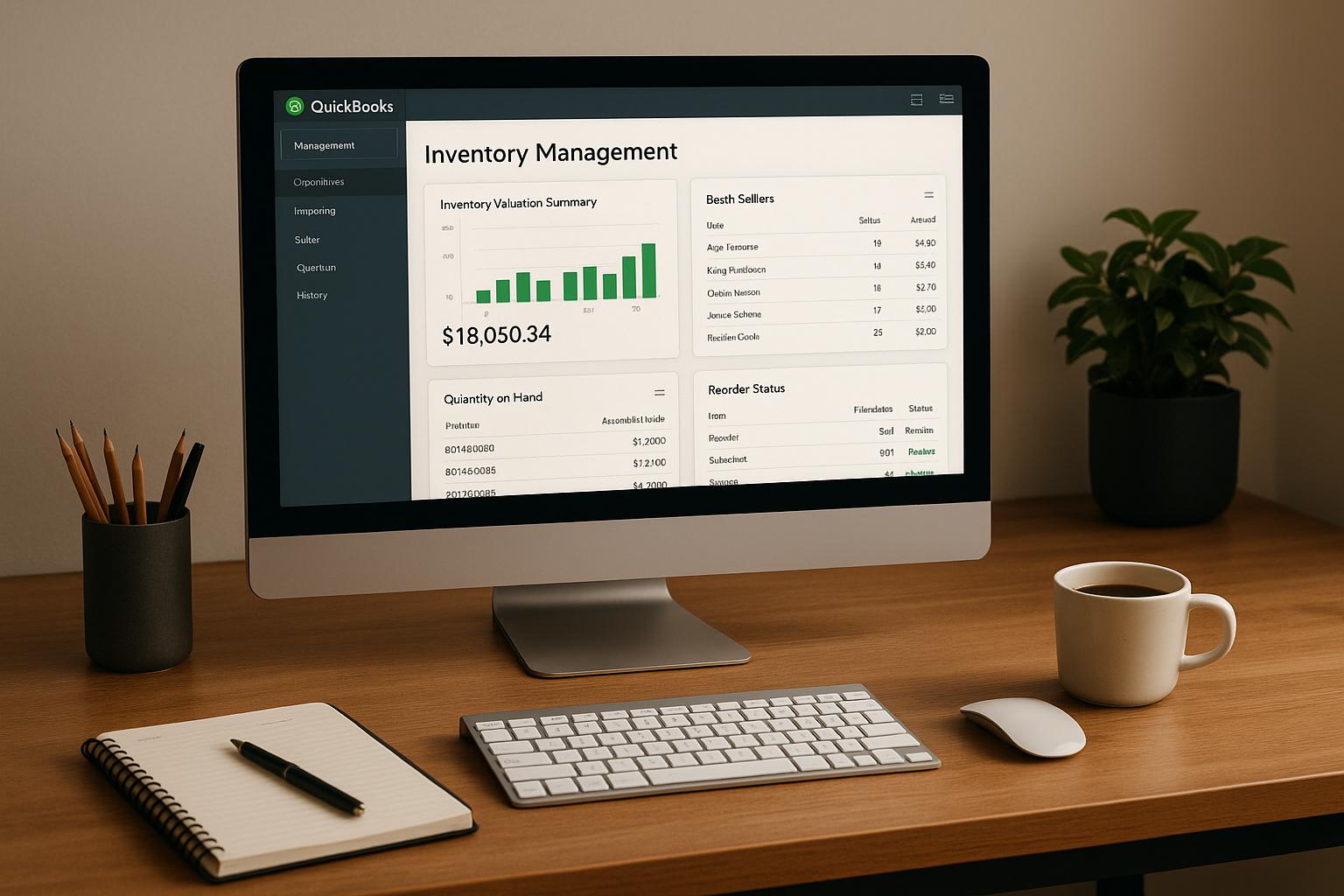

Managing inventory effectively is critical for businesses using QuickBooks Desktop. Stockouts can lead to lost sales, while overstocks tie up cash and increase storage costs. Accurate forecasting helps maintain the right inventory balance, reducing these risks.
Here’s what you need to know:
- Stockouts: Occur when demand exceeds supply, driving customers to competitors. Causes include poor forecasting, unexpected demand spikes, and supply chain issues.
- Overstocks: Result from excess inventory, leading to wasted resources and markdowns. Often caused by overestimating demand or using outdated systems.
- QuickBooks Desktop Tools: Offers basic financial forecasting and inventory reports but lacks advanced demand planning and automation features.
- Limitations: No SKU-level forecasting, limited multi-location tracking (Enterprise required), and no automated low-stock alerts.
For better results, consider pairing QuickBooks with tools like Rapid Inventory. It syncs with QuickBooks to provide real-time tracking, automated reorder alerts, and multi-location management.
Key Takeaway: QuickBooks helps with financial management, but for precise inventory forecasting, you’ll need additional tools to avoid stockouts and overstocks.
Learn About Forecasting in QuickBooks Desktop

What Stockouts and Overstocks Mean for Your Business
Stockouts and overstocks can seriously hurt your bottom line. A stockout happens when you don’t have enough inventory to meet customer demand, while an overstock means you have more inventory than you can sell. Globally, inventory mismanagement costs exceed $1 trillion, with stockouts alone causing an average 4% loss in sales. On top of that, manufacturers and retailers typically hold $1.33 in inventory for every $1 in sales. Adding to the challenge, U.S. retailers report an average inventory accuracy of just 65%, meaning one out of every three items might be misplaced or unaccounted for.
Relying on manual inventory methods only makes things worse. Human errors and fragmented records lead to inaccurate forecasts, which in turn create more stockouts and overstocks. Let’s take a closer look at how each of these issues impacts your business.
Stockouts: When You Run Out of Inventory
Stockouts directly hinder your ability to fulfill orders. When this happens, between 21% and 43% of customers will simply shop elsewhere instead of choosing a substitute. Common causes include unexpected spikes in demand - like those triggered by viral social media trends - poor forecasting, supply chain disruptions such as factory shutdowns, and the "Bullwhip Effect", where minor changes in retail demand create massive fluctuations further up the supply chain. A prime example is the 2017 iPhone X launch, where sell-outs led to a six-week delay in restocking.
Overstocks: When You Have Too Much Inventory
Overstocks lock up cash in unsold products, draining resources instead of generating income. The costs pile up quickly, from warehousing and insurance to labor. Overstocks often occur when businesses adopt "just-in-case" strategies to avoid stockouts, miscalculate demand, or use inventory systems that lack real-time visibility. For instance, many retailers shifted from "just-in-time" to "just-in-case" inventory models during recent supply chain disruptions, only to end up with excessive stock. This often results in products being deeply discounted or, worse, written off entirely - especially in the case of perishable or time-sensitive goods.
What QuickBooks Desktop Can and Can't Do for Forecasting
QuickBooks Desktop, available in its Premier, Accountant, and Enterprise editions, includes tools for financial forecasting. These tools analyze historical Profit & Loss data to project future revenue and cash flow trends. Additionally, Inventory Stock Status reports help identify when it’s time to reorder items. For users of QuickBooks Enterprise, there’s an added forecast calculator that predicts when stock levels will deplete and provides alerts to avoid stockouts. However, these features are not designed for precise inventory demand planning.
The platform's focus is on financial forecasting rather than predicting specific unit demand. It can estimate revenue and expenses but won’t provide insights into how many units of each SKU will be needed in the future. Nicole Pascoe, Co-founder of Craftybase, highlights this limitation:
QuickBooks is excellent at what it was born to do: bookkeeping. But once you start tracking materials, batches, and in-house production, its limitations become evident.
Multi-location inventory tracking is another challenge unless you’re using the Enterprise Platinum or Diamond editions. Even with these premium versions, purchase orders are triggered only when stock drops below a set threshold. There’s no automated notification system for low stock levels, meaning users must rely on manual report checks.
For manufacturers, the gaps are even more apparent. QuickBooks Desktop cannot calculate the raw materials required for future production based on open sales orders. Crystal Systems explains:
QuickBooks Enterprise offers robust inventory management capabilities, but there are several key limitations... It cannot produce inventory forecasting or turnover ratio reports.
Moreover, businesses managing over 20,000 items may encounter performance issues and data instability.
QuickBooks Native Tools vs. What You Actually Need
Here’s a comparison of QuickBooks Desktop’s built-in features versus the requirements for accurate forecasting:
| Feature | QuickBooks Desktop (Native) | Accurate Forecasting Requirements |
|---|---|---|
| Forecasting Basis | Financial (P&L/Balance Sheet) | Unit-based (SKU demand velocity) |
| Multi-Location Tracking | Only in Enterprise Platinum/Diamond | Real-time tracking across all warehouses |
| Reorder Logic | Manual reorder points | Automated alerts based on lead time and safety stock |
| Data Source | Previous year's financial totals | Historical sales, market trends, and seasonality |
| Proactive Alerts | No proactive notifications for low stock | Automated alerts for low stock and potential overstocks |
| Manufacturing Support | Cannot calculate raw materials for future builds | Shortage reports based on BOMs and open sales orders |
| Costing Method | Average Cost (default) or FIFO (Enterprise only) | Rolling average or specific batch costing |
How to Set Up Forecasting in QuickBooks Desktop
Enable and Configure Basic Forecasts
If you're using QuickBooks Desktop Premier, Accountant, or Enterprise editions, you already have access to built-in forecasting tools. These tools analyze past financial data to help you predict future performance. Before diving in, double-check your fiscal year settings under Company > My Company > Report Information. This ensures that your forecast aligns with your actual reporting periods.
To get started with forecasting, head to Company > Planning & Budgeting > Set Up Forecast. You’ll have two options: manually enter data or let QuickBooks auto-fill it using last year’s numbers. For established businesses, the historical data option is quicker and often more accurate. If you're running a new business, you can customize the forecast to reflect your growth expectations.
Once your forecast is set, keep an eye on how it performs by using the Forecast vs. Actuals report located under Reports > Budgets and Forecasts. This report shows where your predictions differ from real results, giving you insights to fine-tune future forecasts. Keep in mind, if you rename any account included in your forecast, it will unlink from the forecast. To fix this, you'll need to recreate the forecast using the updated account name.
Adjust Forecasts for Your Inventory
After setting up the basics, you can refine your forecast to account for inventory needs. While financial forecasts provide a solid foundation, inventory planning requires a bit more detail. Use this formula to determine when to reorder stock:
(Average Daily Usage × Average Lead Time in Days) + Safety Stock.
For instance, if you sell 20 units daily and your supplier takes 10 days to deliver, you’d need 200 units on hand before placing a new order. Add some extra safety stock to handle unexpected spikes in demand.
To calculate safety stock, use this formula:
(Maximum Daily Usage × Maximum Lead Time) – (Average Daily Usage × Average Lead Time).
Let’s say your maximum daily sales hit 30 units, and the lead time stretches to 15 days. Your safety stock would be 250 units (450 – 200 = 250).
Don’t forget to adjust your forecasts for seasonal trends or special campaigns. For example, if you sell swimwear, you might want to increase your projections for May through August, even if last year’s numbers were lower due to a late product release. Regularly running Forecast vs. Actuals reports will help you compare your predictions with actual results, so you can continuously improve your planning.
sbb-itb-19ed50f
How Rapid Inventory Improves Forecasting for QuickBooks Desktop
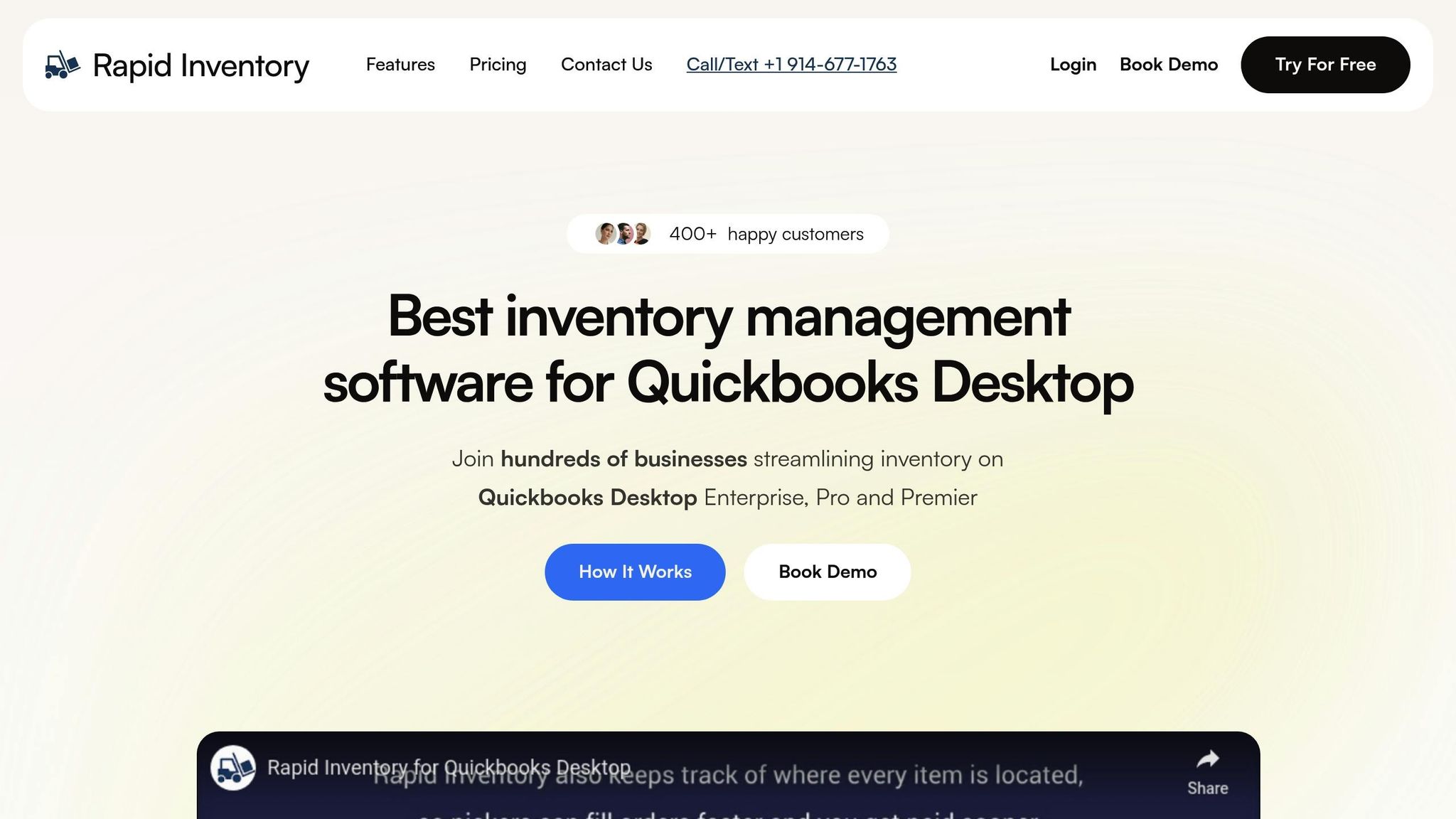

QuickBooks Desktop vs Rapid Inventory: Forecasting Features Comparison
QuickBooks Desktop has its strengths, but when it comes to precise, unit-based forecasting, it often falls short - especially for businesses managing complex warehouse operations. That’s where Rapid Inventory steps in, offering a seamless web-based solution to bridge these gaps. Fully compatible with QuickBooks Desktop (Enterprise, Pro, and Premier), Rapid Inventory syncs automatically, simplifying inventory management and eliminating the need for manual data entry.
One standout feature is its two-way synchronization. Every inventory movement, order, and item update is reflected in both systems in real time. This eliminates the hassle of managing spreadsheets and reduces the risk of "phantom inventory" - those ghost items that appear in your system but don’t actually exist on your shelves. Trusted by hundreds of users, Rapid Inventory has proven to be a reliable tool for tackling forecasting challenges effectively.
Features That Improve Forecasting Accuracy
Rapid Inventory equips businesses with tools that make forecasting easier and more precise. Here’s how:
- Real-Time Reports: Get instant insights into on-hand quantities, purchase orders, and sales commitments. These details help calculate accurate reorder points and prevent missteps.
- Multi-Warehouse Tracking: Manage inventory across unlimited warehouses and bin locations - even on the Pro plan, which costs $90 per user per month. In contrast, QuickBooks Desktop requires an upgrade to its Enterprise Platinum or Diamond editions for similar functionality.
- FIFO and FEFO Picking: The platform supports both FIFO (First In, First Out) and FEFO (First Expired, First Out) strategies, ensuring older or expiring stock is used first. QuickBooks Desktop, by comparison, defaults to average costing, with FIFO only available in its highest-tier editions.
-
Mobile Barcode Scanning: Built-in barcode scanning ensures accuracy during receiving and picking, confirming item details, location, and quantity. This feature makes data entry smoother and more reliable. As Jacob, a CEO, shared:
My team was up and running in a few days. Very straightforward and easy to use.
- Reorder and Backorder Management: A dedicated Reorder Report notifies you when to restock, helping you maintain optimal inventory levels. Backorder tracking highlights unfulfilled orders, ensuring you stay on top of customer needs. Together, these tools help prevent stockouts and overstocking.
Comparing Rapid Inventory to QuickBooks Native Tools
| Feature | QuickBooks Desktop (Native) | Rapid Inventory |
|---|---|---|
| Sync Method | Native/internal processes | Automatic two-way web connector sync |
| Multi-Location Tracking | Limited to higher editions | Unlimited warehouses and locations on all plans |
| Costing Methods | Average Cost (default); FIFO in top tiers | Supports both FIFO and FEFO strategies |
| Mobile Scanning | Requires Advanced Inventory + hardware | Built-in for all workflows |
| Accessibility | Local installation or paid cloud hosting | Web-based access from anywhere |
| Forecasting Tools | Basic stock status, limited reporting | Real-time reorder reports, detailed PO/SO tracking |
This comparison highlights how Rapid Inventory offers more advanced features than QuickBooks’ native tools, especially for forecasting.
While QuickBooks Enterprise Platinum comes with a hefty price tag and features that may not suit every business, Rapid Inventory’s Pro plan is available at $90 per user per month. It even includes free onboarding and training, which typically costs between $600 and $1,500. For larger teams (10+ users), the Unlimited plan is $900 per month and includes custom inventory reports and a dedicated account manager.
Frank, a manager who adopted Rapid Inventory, shared his experience:
Your technical support staff are very helpful. I was very pleased with their assistance.
With an onboarding process that takes just 6–7 days, Rapid Inventory allows businesses to quickly enhance their forecasting accuracy. This faster setup helps avoid the common pitfalls of stockouts and overstocking, giving you more control over your inventory.
Best Practices for Better Inventory Forecasting
Effective inventory forecasting isn’t just about having the right tools - it’s about making the most of your data. Whether you’re looking to avoid stockouts or prevent overstocking, a few smart strategies can help you stay ahead of shifting demand. These practices build on your current forecasting methods to minimize inventory issues and keep your operations running smoothly.
Use Past Sales Data to Predict Future Demand
Your historical sales data is the backbone of accurate forecasting. Tools like QuickBooks Desktop offer reports that make extracting this data easier. For instance, the Sales by Product/Service Summary highlights your top-selling items, while the Historic Inventory Report reveals inventory levels and values over time, helping you spot long-term trends. Additionally, the Inventory Valuation Detail report tracks how past transactions have influenced your stock levels and costs.
Certain events can create demand spikes - viral posts might cause short-term surges, while holidays like Father’s Day lead to predictable seasonal increases. This is where quantitative forecasting shines. By analyzing historical sales data, you can build models that predict future demand. The more robust your dataset, the more reliable your forecasts become.
However, there are pitfalls to watch out for. For example, altering SKU IDs for the same product can disrupt the historical data chain, making forecasts less accurate. It’s also important to evaluate sales data separately for each channel since online and in-store trends often differ.
QuickBooks emphasizes the importance of even minor forecasting improvements:
"Even a minor improvement in forecast accuracy can have a ripple effect across a business, reducing inventory buffers, dead stock, and unnecessary manual labor".
The stakes are high - poor forecasting cost US retailers around $300 billion in markdowns from overstocking in 2018 alone.
Track Inventory Levels in Real Time
While historical data sets the stage, real-time tracking ensures you stay adaptable to immediate changes in demand. Spreadsheets might offer a snapshot, but they quickly become outdated. Automated systems, on the other hand, provide up-to-the-minute insights, reducing errors and enabling smarter decisions. This is especially critical in today’s market, where 67% of US consumers expect delivery within two days or less.
Platforms like Rapid Inventory provide real-time reports that give a clear picture of stock levels, orders, and sales commitments. Features like the Reorder Report send timely alerts when it’s time to restock, taking the guesswork out of maintaining optimal inventory. Mobile barcode scanning further streamlines processes by instantly updating stock details, including item location and quantities, during receiving and picking.
Automation doesn’t just save time - it boosts accuracy. Real-time tracking minimizes manual errors and makes fulfillment faster and more efficient, saving valuable resources.
Monitor Inventory Across Multiple Locations
Applying these strategies across all your locations can help prevent imbalances. If you operate multiple warehouses or distribution centers, tracking inventory by location is essential. Without it, one site could face stockouts while another is overstocked. For businesses selling through an average of five channels, having real-time visibility across your network is crucial.
Using Inventory Location Reports regularly allows you to monitor stock levels across warehouses and marketplaces. This transparency empowers you to make smarter decisions, like transferring stock from one warehouse to another instead of placing new orders. As QuickBooks notes:
"Inventory reports arm you with the information required to ensure that you always have the right amount of stock, in the right place, at the right time".
Platforms like Rapid Inventory support unlimited warehouses and bin locations, while QuickBooks Desktop offers similar functionality in its Enterprise Platinum or Diamond editions. Additionally, strategies like FIFO (First In, First Out) and FEFO (First Expired, First Out) help reduce waste by ensuring older or expiring stock is used first.
Conclusion
Managing inventory forecasting becomes much more straightforward when you leverage the right tools and strategies. QuickBooks Desktop lays a solid foundation by tracking your financial data, generating sales reports, and keeping essential business information organized. Pairing it with Rapid Inventory takes things a step further, helping you avoid both stockouts and excess inventory.
The secret lies in automation and real-time data. By ditching manual spreadsheets and enabling an automatic two-way sync between QuickBooks and Rapid Inventory, you minimize errors while gaining real-time insights into your stock levels, outstanding orders, and item locations. Tools like mobile barcode scanning, reorder reports, and multi-location tracking ensure that your physical inventory aligns perfectly with your digital records - whether across warehouses or sales platforms. This seamless integration bridges the gap between accurate financial forecasting and efficient inventory management.
With over 400 customers served over 17 years, Rapid Inventory has shown how pairing specialized inventory tools with QuickBooks Desktop can transform forecasting into a reliable and efficient process. Real-time tracking keeps your inventory data updated instantly, while location-based reports help you avoid the costly mistake of ordering items already available at another site.
Together, these tools enable you to forecast more accurately, manage orders with confidence, and maintain balanced inventory levels - all without relying on guesswork.
FAQs
How can QuickBooks Desktop users improve the accuracy of their inventory forecasts?
QuickBooks Desktop users can improve the precision of their inventory forecasts by leveraging tools designed to analyze historical sales data, seasonal patterns, and demand trends. These forecasting features automate the process of setting ideal inventory levels, helping to reduce the chances of running out of stock or overstocking.
Additionally, inventory management solutions such as Rapid Inventory take accuracy a step further. They provide real-time inventory tracking, automated reorder notifications, and in-depth reporting. These features empower businesses to make smarter decisions and respond quickly to shifts in demand. To keep forecasts dependable, regularly reviewing projections, factoring in supplier lead times, and adjusting for recent sales trends are essential steps.
What challenges does QuickBooks Desktop face in managing inventory across multiple locations?
QuickBooks Desktop provides basic tools for managing inventory across multiple locations, but it falls short in meeting the needs of businesses with more complex operations. One key limitation is that inventory adjustments are only applied at the site level, which makes it tough to monitor stock changes in specific bin locations. On top of that, the system doesn’t allow you to track serial numbers and lot numbers at the same time. Another drawback? It doesn’t come with built-in features for printing or scanning barcode labels.
Handling inventory across several locations can also feel clunky. Often, you’ll find yourself jumping between reports and settings just to get a clear picture of stock levels. While the "Advanced Inventory" feature in QuickBooks Desktop Enterprise offers some improvements for multi-location tracking, it still has its shortcomings. For example, it doesn’t let you manage multiple units of measure tied to different barcodes or send automatic low-stock alerts. For businesses with more sophisticated inventory requirements, these limitations may mean turning to additional tools for support.
Why is real-time inventory tracking important for managing stock levels?
Real-time inventory tracking plays a crucial role in keeping stock levels just right. With real-time insights, you can instantly spot when items are running low or piling up, helping you sidestep the financial pitfalls of stockouts or overstocking.
Leveraging up-to-the-minute data lets you set accurate reorder points, make smarter purchasing decisions, and adapt quickly to shifts in demand. The result? You save money while ensuring your customers can always find the products they’re looking for.