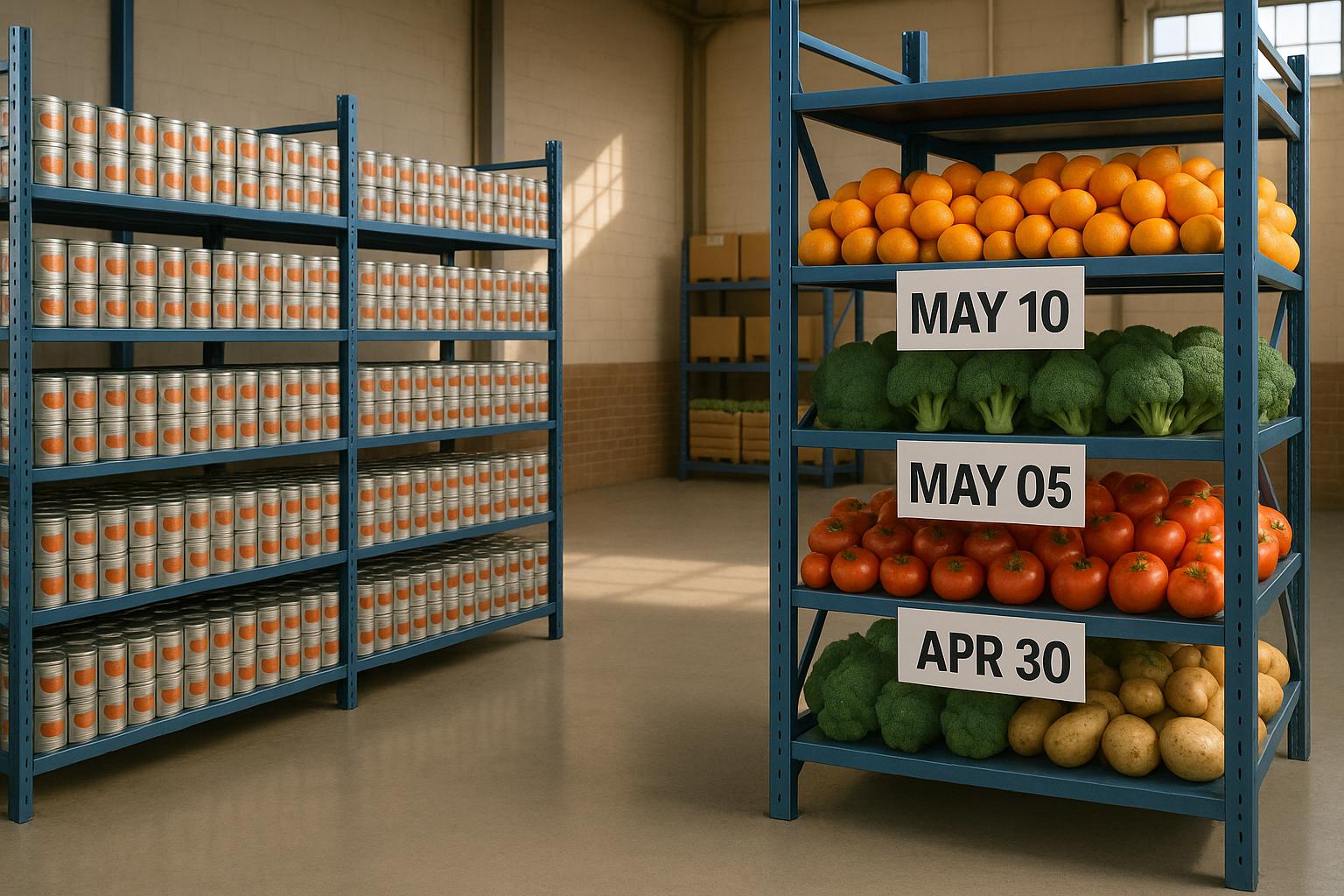
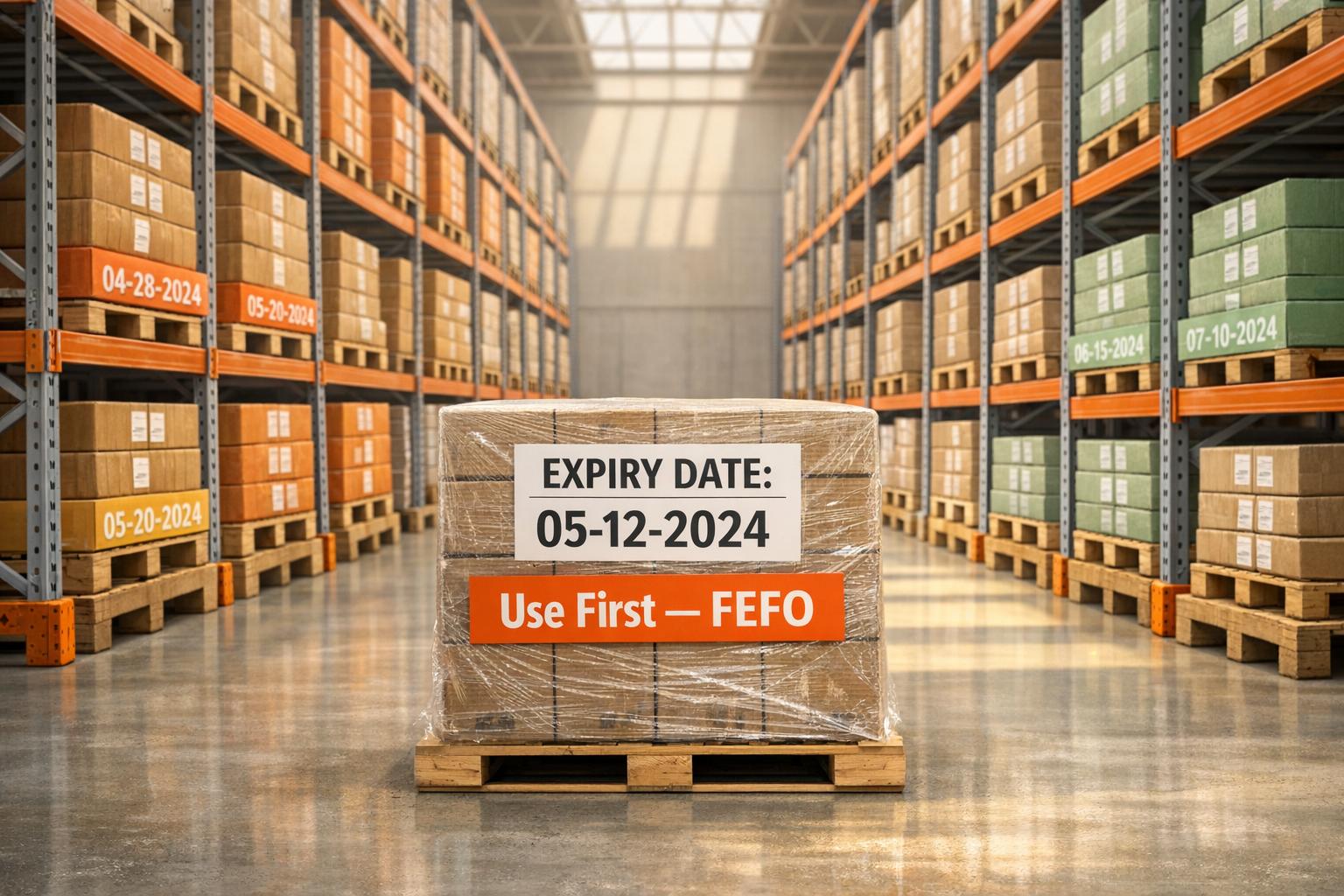
FEFO (First Expired, First Out) is a method that prioritizes inventory based on expiration dates, ensuring products nearing expiry are used or shipped first. This approach is essential for industries like food, pharmaceuticals, and cosmetics, where expired goods lead to waste, financial losses, and compliance risks. Here’s why FEFO matters:
- Reduces Waste: Prevents expired inventory, cutting losses by 20–35% in the first year.
- Maintains Quality: Ensures customers receive effective, usable products.
- Supports Compliance: Simplifies regulatory requirements and traceability.
- Optimizes Space: Frees up storage by moving near-expiry stock first.
- Improves Efficiency: Guides faster, error-free picking processes.
- Boosts Customer Trust: Avoids shipping near-expired or expired goods.
- Provides Better Data: Tracks inventory performance for smarter planning.
FEFO is especially useful for perishable goods and requires precise tools like inventory management systems to track expiration dates and automate workflows.
FEFO: Maximizing Efficiency and Minimizing Waste in Warehouse Inventory Management
1. Less Product Waste and Fewer Write-Offs
When a product expires, it’s not just a total loss of its value - there are also extra costs tied to disposal, labor, and reordering. For small businesses, this adds up fast, with 3–5% of their total inventory value lost to expiration every year.
This is where FEFO (First Expired, First Out) makes a real difference. By prioritizing items with the earliest expiration dates, FEFO ensures older products don’t get stuck behind newer stock and quietly expire. Unlike FIFO (First In, First Out), which might focus more on accessibility, FEFO zeroes in on expiration dates. This smart rotation system not only reduces waste but also streamlines warehouse processes.
Another hidden cost of expired inventory? The steep markdowns needed to clear out near-expiry products. FEFO helps avoid these by keeping stock rotation on track from the get-go, minimizing the need for last-minute discounts.
"The difference? With FEFO, nothing expires unnecessarily." - VivaShelf
Companies that adopt FEFO often report a 20–35% drop in losses from expired products within the first year. It’s a win-win: less waste and a smoother path to better operations.
2. Better Product Quality and Freshness
FEFO doesn't just cut down on waste - it also plays a key role in maintaining high product quality. By prioritizing the shipment of items closest to their expiration date, FEFO helps ensure products are used while they’re still effective, regardless of when they were received. This approach extends the remaining shelf life of products and preserves their performance.
This is crucial for products like sunscreens, serums, and supplements, where active ingredients naturally lose potency over time. For instance, an SPF 50 sunscreen might not provide the promised level of protection if it’s past its prime.
Customer trust hinges on this. A staggering 82% of consumers say they would never reorder from a brand that sent them an expired product. As highlighted by the StockPilot Editorial Team:
"Customer trust damage is permanent. One expired product shipped to a customer generates negative reviews, chargebacks, and social media complaints that cost 10x the product value to recover from." - StockPilot Editorial Team
To maintain quality at scale, consider implementing a 30/60/90-day alert system. Start monitoring products at 90 days, promote those nearing 60 days, and take immediate action on items at 30 days. Pair this with barcode scanning to digitally track expiration dates during receiving. These measures help ensure you’re delivering fresh, effective products every time.
3. Stronger Regulatory Compliance and Traceability
FEFO doesn't just help with reducing waste and improving product quality - it also plays a key role in meeting regulatory requirements and ensuring traceability. In industries where compliance is non-negotiable, FEFO simplifies the process. By prioritizing expiration dates over receipt dates for inventory rotation, FEFO naturally creates the kind of documented system regulators expect to see. This systematic approach not only satisfies regulatory requirements but also supports accurate and efficient lot management.
Capturing details like lot numbers, expiration dates, and supplier codes during receiving builds a traceable record that aligns with the Food Safety Modernization Act's (FSMA) 24-hour lot identification standard.
The stakes are high: FDA fines can range from $1,000 to $500,000, and in the pharmaceutical sector, expired products are classified as "adulterated", carrying serious legal risks. A well-implemented FEFO system takes the guesswork out of the equation by automatically identifying the earliest-expiring lots and flagging expired batches.
Globally, traceability remains a critical issue. For example, over 70% of food recalls in the EU are linked to labeling or traceability problems. FEFO simplifies this by maintaining detailed batch records, which are essential for certifications like Halal and for passing audits.
A real-world example of effective recall management comes from October 2019, when Nestlé leveraged precise batch tracking to limit its Toll House Cookie Dough recall to specific batch codes, avoiding a widespread withdrawal. Automated FEFO systems can dramatically speed up recall processes, reducing mock recall times to under 30 minutes.
"The Food Safety Modernization Act (FSMA) requires complete traceability - if you can't trace a contaminated product back to its lot number within 24 hours, you're in violation." - StockPilot Editorial Team
Tools like Rapid Inventory, with built-in lot and serial number tracking combined with FEFO picking logic, provide clear and auditable records of every inventory movement. This ensures compliance while making traceability tasks more manageable.
4. More Efficient Use of Warehouse Space and Stock Levels
Warehouse space doesn’t come cheap. Every shelf occupied by a product nearing its expiration is a missed opportunity to store fresh, sellable inventory. FEFO (First Expired, First Out) tackles this issue head-on by prioritizing the movement of soon-to-expire products, helping businesses maintain a leaner storage system.
Accurate inventory data is key to maximizing physical space. FEFO addresses a common challenge: the risk of reordering unnecessarily due to outdated or inaccurate inventory records. Without clear insights into expiration dates, managers may inadvertently stockpile expired products, leading to inefficiencies and wasted resources.
"Every slot occupied by a product creeping toward its expiry date is a slot that could hold a fresh, sellable unit. You're paying rent on dead weight." - StockPilot
The financial stakes are high. For businesses like grocery retailers, which often operate on razor-thin net margins of 1% to 3%, even a 4% loss from expired stock can significantly hurt profits. On the brighter side, warehouses that implement strict stock rotation practices, including FEFO, have seen food waste reductions of approximately 26% within a year.
FEFO doesn’t just minimize waste; it encourages smarter warehouse layouts. Features like selective racking and automated alerts (triggered at 30, 60, and 90 days) ensure pickers can access specific batches efficiently. These systems streamline operations by turning potential last-minute scrambles into a routine process. For instance, when an item hits the 30-day mark, automated systems can initiate markdowns, promotions, or donation processes, clearing space before products become unsellable. This proactive approach enhances operational flow.
Tools like Rapid Inventory make this process even more seamless. By integrating FEFO picking logic with real-time inventory tracking across multiple warehouse locations, businesses gain clear visibility into shelf life, expiration timelines, and which items need immediate attention. This level of precision ensures products are moved efficiently, reducing waste while boosting overall warehouse performance.
sbb-itb-19ed50f
5. Faster Picking and Clearer Warehouse Workflows
Once you've optimized your space and stock management, the next big step is making sure your picking process runs like clockwork. Streamlined picking isn't just nice to have - it's essential for keeping operations smooth and efficient.
When staff work without clear direction, mistakes happen. They might grab the wrong product or ship items that are close to expiring. That's where FEFO (First Expired, First Out) picking rules come in, removing the guesswork entirely. A Warehouse Management System (WMS) steps in to create a detailed pick list, guiding workers to the exact bin and batch number for the item that's about to expire. The process is simple: the picker follows the instructions, scans the item, and moves on.
"The role of the WMS is to avoid manual arbitration. It must prioritize the right batch, secure the scan and ensure reliable stock removal right through to dispatch."
This approach transforms the picking process. With clear, easy-to-follow pick lists, staff can move quickly, doubling their speed while cutting down manual effort by a whopping 90%. Plus, standardized FEFO workflows mean less time spent on training and fewer errors, no matter the order channel.
Tools like Rapid Inventory make this even easier. With features like integrated FEFO strategies, lot tracking, and mobile barcode scanning, these systems ensure your team spends less time making decisions and more time getting products out the door accurately.
These picking upgrades underscore how FEFO provides a real operational advantage, paving the way for a deeper dive into how it stacks up against FIFO.
6. Increased Customer Trust and Satisfaction
FEFO doesn’t just streamline operations - it also plays a crucial role in winning over customer trust and ensuring satisfaction.
Shipping products with a short remaining shelf life can seriously damage customer confidence, no matter how fast the delivery is. FEFO addresses this issue by prioritizing stock rotation based on expiration dates, ensuring customers receive items with the longest possible shelf life. This is especially critical for industries like pharmacies, restaurants, and retailers, where product usability directly impacts customer satisfaction.
"Customers judge a brand by the product received, not the logistics employed. Minimal shelf life breaks that promise." - Shippingbo
Poor stock rotation practices lead to significant losses - brands lose between 4% and 8% of perishable inventory annually. These losses often translate into customer complaints, refund requests, and negative reviews. For e-commerce businesses, even one batch of near-expiry shipments can hurt seller ratings and reduce product visibility.
A practical solution is implementing minimum shelf life rules within your warehouse management system. For example, setting a rule to prevent shipping any product with less than 90% of its shelf life remaining ensures customers consistently receive fresh products. It also provides B2B buyers with enough time to manage their own inventory effectively. Tools like Rapid Inventory can automate FEFO-based picking logic and lot tracking, reducing the need for manual oversight.
7. Better Data for Planning and Ongoing Improvement
FEFO creates a detailed data trail that helps streamline operations. Every time a lot is processed - whether it’s received, picked, or written off - the system logs batch-specific details like expiration dates and remaining shelf life. Over time, this data offers clear insights into product performance, highlighting which items are moving quickly, which are lagging, and where purchasing habits might need adjustment. A great example of this is the inventory aging report.
These reports provide a snapshot of how much sellable life is left for each SKU and batch, helping your team spot at-risk stock before it becomes unsellable. For instance, if a product frequently triggers a 30-day expiration alert, it’s a sign that future order quantities should be reduced - avoiding unnecessary write-offs.
FEFO data isn’t just about product rotation; it also uncovers valuable supplier performance insights. By monitoring which vendors regularly deliver goods with shorter shelf lives, you can make informed decisions to refine your sourcing strategies.
With tools like Rapid Inventory, QuickBooks Desktop users can take advantage of lot and serial tracking, as well as real-time reporting. This allows businesses to capture expiration data as products are received and incorporate it into smarter replenishment planning. Adding multi-stage alerts to the mix ensures better purchasing decisions and minimizes inventory losses.
FIFO vs. FEFO: A Side-by-Side Comparison
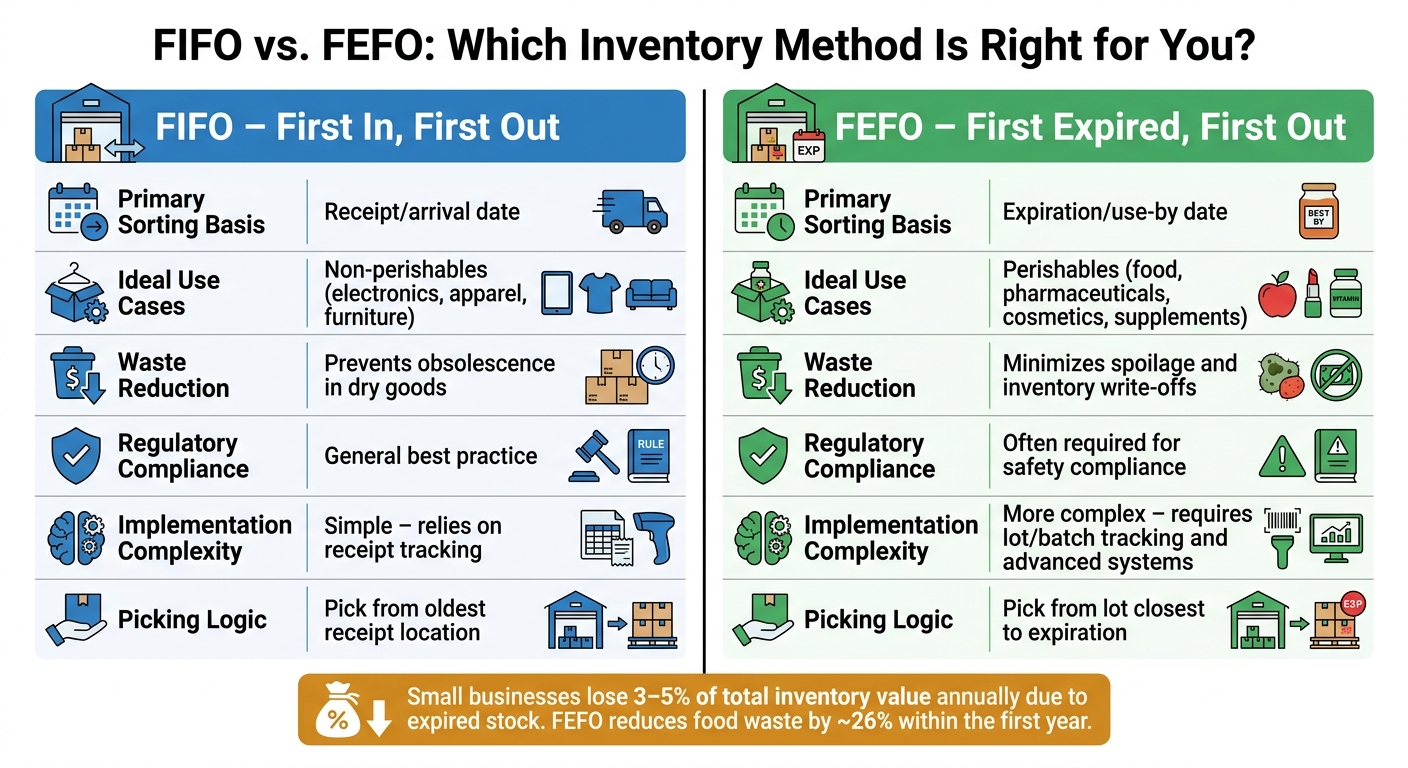
FIFO vs. FEFO: Inventory Management Comparison
FIFO and FEFO are two different methods for managing inventory. FIFO (First In, First Out) organizes stock based on when it arrived, while FEFO (First Expired, First Out) prioritizes items by their expiration or "use-by" dates.
The key difference lies in the focus: FIFO assumes older stock should leave first, which works well for items without expiration concerns. FEFO, however, is tailored for perishables, where expiration dates take precedence over arrival dates. This is especially important when newer shipments might expire sooner than older inventory due to supplier delays or production batch differences.
| Criteria | FIFO (First In, First Out) | FEFO (First Expired, First Out) |
|---|---|---|
| Primary Sorting Basis | Receipt/arrival date | Expiration/use-by date |
| Ideal Use Cases | Non-perishables (e.g., electronics, apparel, furniture) | Perishables (e.g., food, pharmaceuticals, cosmetics, supplements) |
| Waste Reduction | Prevents obsolescence in dry goods | Minimizes spoilage and inventory write-offs |
| Regulatory Compliance | General best practice | Often required for safety compliance |
| Implementation | Simple; relies on receipt tracking | More complex; requires lot/batch tracking and advanced systems |
| Picking Logic | Pick from the oldest receipt location | Pick from the lot closest to expiration |
For products without expiration dates, FIFO is a reliable choice. But for items with a shelf life - like food, supplements, or cosmetics - FEFO is critical. In fact, small businesses lose an estimated 3% to 5% of their inventory value annually due to expired stock.
It's worth noting that while FEFO governs the physical flow of goods in a warehouse, financial reporting and inventory valuation often still rely on FIFO. This distinction ensures operational efficiency without compromising accounting consistency.
Conclusion
FEFO helps cut down on waste, keeps products fresh, ensures compliance, and improves customer satisfaction - all while making operations more efficient.
It's worth noting that small businesses lose an estimated 3% to 5% of their total inventory value annually due to expired stock. Adopting proper stock rotation methods like FEFO can reduce food waste by an average of 26% within just a year, which directly impacts profitability in a positive way.
These numbers highlight how important FEFO is in today's warehousing landscape. For QuickBooks Desktop users, incorporating FEFO is simple with Rapid Inventory. The platform offers integrated FEFO picking strategies, lot and serial tracking, mobile barcode scanning, and seamless two-way syncing with QuickBooks. With tools like these, Rapid Inventory (rapidinventory.com) ensures your inventory reflects what’s actually usable - not just what’s sitting on the shelves. Whether you're running one warehouse or managing multiple locations, the system provides clear, guided picking instructions to ensure the right products are shipped every time.
"Every product that expires on your shelf is money thrown away. Purchase cost, storage cost, disposal cost, and opportunity cost of the space it occupied." - Steve Maurer, IME
FEFO isn't just a smart warehouse strategy - it’s often a compliance necessity and a key factor in building customer trust. Success starts with having the right tools to get the job done.
FAQs
When should I use FEFO instead of FIFO?
When dealing with products that have expiration dates - like food, cosmetics, or pharmaceuticals - FEFO (First Expired, First Out) is the way to go. This system ensures items nearing their expiration date are used or sold first. It’s a smart way to cut down on waste, comply with regulations, and keep customers happy with fresher items.
On the other hand, for non-perishable goods such as hardware or clothing, FIFO (First In, First Out) is more practical. This method prioritizes selling or using the oldest stock first, keeping inventory organized and avoiding obsolescence.
To make FEFO easier, tools like Rapid Inventory can be a game-changer. These systems automatically track expiration dates and generate pick lists that prioritize items closest to expiring, streamlining the entire process.
What data is needed to run FEFO correctly?
To implement FEFO successfully, it's essential to monitor critical details such as lot or batch numbers, manufacturing dates, and expiration dates throughout the inventory's journey. Make sure that storage locations and stock movements are tied to batch data. Tools like Rapid Inventory can streamline this process by creating automated pick lists that prioritize items closest to their expiration dates. This approach not only boosts accuracy but also helps cut down on waste.
How do I set minimum shelf-life rules for shipments?
To establish minimum shelf-life rules, you can configure your inventory management system to enforce specific criteria during order allocation. For instance, you might set a threshold requiring at least 365 days of shelf life remaining before an item is considered for shipment. With tools like Rapid Inventory, this process becomes seamless. It supports FEFO (First Expired, First Out) picking along with lot and serial tracking, ensuring that only batches meeting expiration and compliance standards are shipped.