Want to optimize your warehouse storage? The right racking system can improve space utilization, reduce costs, and enhance safety. Here's a quick breakdown of what you'll learn:
- Maximize Space: Use high-density systems like drive-in racking to boost storage by up to 70–80%.
- Improve Safety: A structured layout can cut workplace accidents by up to 80%.
- Save Money: Businesses often recover their investment in 12–18 months.
- Plan for Growth: Modular designs allow for future adjustments without major overhauls.
Key Steps to Get Started:
- Measure your warehouse space, including height, obstacles, and aisle widths.
- Analyze your inventory needs - SKU turnover, pallet size, and storage type (FIFO or LIFO).
- Choose a racking system that balances storage density, accessibility, and cost.
- Ensure compliance with safety standards, including proper clearances and load capacities.
- Use tools like inventory management software to streamline operations.
Whether you’re managing perishables or bulk goods, this guide covers everything you need to set up an efficient and safe warehouse racking system.
Types of Warehouse Racking Systems Explained | Benefits & How to Choose the Right Rack Design Layout
sbb-itb-19ed50f
Evaluating Your Warehouse Space and Inventory Needs
Before choosing a racking system, it's crucial to assess your warehouse space and understand your inventory requirements.
Measuring Current Space Usage
Think of your warehouse as a 3D puzzle. Start by measuring the clear height - the distance from the floor to the lowest overhead obstacle, like lights, HVAC ducts, or roof joists. This measurement sets the maximum rack height and directly affects how much you can store. While you're at it, map out any constraints such as columns, swing doors, windows, low-clearance areas, and dock positions. These can cut into your storage potential by 10% to 25%.
"Treat your space like a road system. Your aisles need to be wide enough for forklifts to navigate safely, but not so wide that you're wasting storage space."
– Jordan Tlumak, OneRack Solutions
Don't forget to check the slab's load capacity and levelness, especially if you're considering very narrow aisle (VNA) systems. Also, measure the distance to sprinkler deflectors - most standard systems need an 18-inch gap, but ESFR systems might require 36 inches. Consult your local fire marshal to ensure your rack heights comply with safety regulations.
A good rule of thumb is to dedicate about 55–70% of your warehouse space to racking and 30–45% to aisles and staging areas. Measure your forklift's right-angle stacking clearance, too. For example, counterbalance forklifts typically need 12–14 feet, reach trucks require 8.5–10 feet, and VNA trucks can operate in as little as 6–7 feet.
Reviewing Your Inventory Profile
Break your inventory into three categories based on how often items move: "A" for fast-moving items, "B" for medium-turnover items, and "C" for slow-moving ones. Place high-turnover items in the "Golden Zone" - the most accessible areas near shipping and receiving. This reduces travel time and labor costs.
"It is not possible to determine a warehouse rack layout without knowing how often inventory enters and exits the rack in a given period."
– Pablo Montes, Managing Director, AR Racking
Take precise measurements of your products, including the length, width, height, and weight of palletized loads. Note whether your loads are uniform or irregular and whether you're storing full pallets or individual cases. This information helps determine the right beam levels and load capacities for your racks.
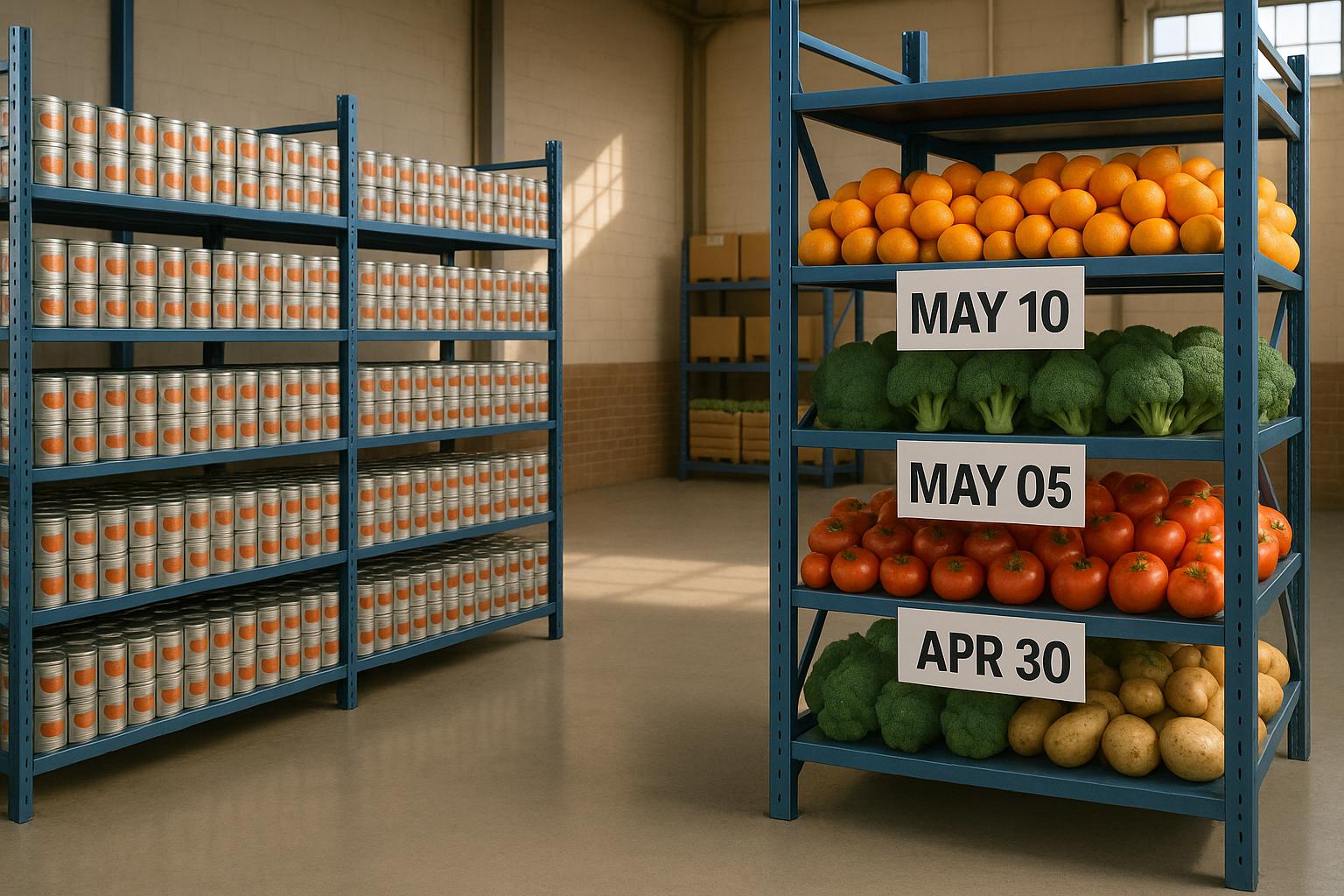
Consider your inventory flow. Do you need First-In, First-Out (FIFO) for perishables? Or is Last-In, First-Out (LIFO) better for non-perishables?. High SKU diversity with low volume per item generally works best with selective racking for easy access. On the other hand, low SKU diversity with high volume per item often benefits from high-density systems like drive-in or pallet flow racks. Also, identify any special requirements, such as refrigeration, freezer storage, or handling hazardous materials, as these may require custom layouts and additional investment.
With a clear understanding of your space and inventory, you're ready to choose a racking system that fits your needs.
Selecting the Right Racking System

Warehouse Racking System Types Comparison Chart
Choosing the best racking system for your warehouse comes down to balancing your operational needs with your budget. The right system can streamline your workflow, maximize storage, and prevent wasted space.
Common Racking System Types
Selective pallet racking is the go-to option for warehouses worldwide, offering full access to every pallet. This system is perfect if you need to retrieve any SKU at any time. However, it requires wide aisles for forklifts, which limits storage density.
"Selective pallet racking is the most common type of warehouse racking... because users can access or 'select' pallet loads without having to move other pallets."
– Conger Industries Inc.
Double-deep racking improves storage efficiency by holding pallets two-deep, reducing aisle space and increasing capacity by up to 40% compared to single-deep systems. However, it only provides direct access to half of your pallets and requires specialized reach trucks with pantograph extensions.
Drive-in and drive-thru racking are high-density setups where forklifts enter the racking structure. Drive-in systems use a single entry point, following a LIFO (Last In, First Out) method, while drive-thru systems allow access from both sides, following FIFO (First In, First Out). These systems can store up to 75% more pallets than selective racking and utilize up to 70% of available space.
"Drive-in racking systems are the most effective solution for maximizing space in cold storage environments."
– Damotech
A great example: Coloma Frozen Foods transitioned from selective to drive-in racking and increased pallet storage by 75%, saving $200,000 annually.
Push-back racking utilizes inclined rails and nested carts to store pallets 2–6 deep. Adding a new pallet pushes the previous ones back. This system offers up to 75% higher storage density than selective racking while maintaining better accessibility than drive-in systems.
Pallet flow (gravity flow) racking uses rollers to move pallets from the loading side to the picking side automatically. It's ideal for FIFO operations and can store up to 20 pallets deep in a single lane. While highly efficient, it’s the most expensive option and requires regular maintenance due to its moving parts.
Cantilever racking is designed for long, bulky items like lumber or pipes. It features arms extending from a central column, making loading and unloading easier. This system is not suitable for standard pallet storage but excels in handling oversized goods.
Here’s a quick comparison of the main systems:
| Racking Type | Storage Density | Selectivity | Inventory Flow | Cost per Position |
|---|---|---|---|---|
| Selective | Low | 100% (High) | FIFO/LIFO | $50–$80 |
| Double-Deep | Medium-High | 50% (Moderate) | LIFO | $80–$200 |
| Drive-In | Very High | Low | LIFO | $115–$140 |
| Push-Back | High | Moderate | LIFO | $151–$295 |
| Pallet Flow | Very High | Moderate | FIFO | $300–$500 |
| Cantilever | N/A (Bulky items) | High | N/A | $850–$1,700/bay |
Use this table to weigh your options based on your storage needs and operational goals.
Key Selection Criteria
Match your SKU profile to the system. For warehouses with a high variety of SKUs but low quantities per item, selective racking provides the flexibility you need. Conversely, if your inventory consists of fewer SKUs with high volumes, systems like drive-in or push-back racking make better use of your space.
Check forklift compatibility. Some systems require specific forklift types. For example, double-deep racking needs reach trucks with pantograph extensions, while drive-in systems demand skilled operators comfortable maneuvering inside the structure. Very narrow aisle (VNA) systems require turret trucks.
Consider inventory rotation. FIFO systems, such as pallet flow or drive-thru racking, are essential for perishable goods like food or pharmaceuticals. For non-perishable bulk items with long shelf lives, LIFO systems like push-back or drive-in are more efficient.
Account for maintenance costs. High-density systems with moving components, like pallet flow racking, require more upkeep. Factor these expenses into your decision.
Plan for future growth. While selective racking has the lowest upfront cost, it may not scale well if your storage needs increase. High-density systems like pallet flow require a larger initial investment but can save space in the long run. Balance your current budget with your projected needs over the next 3–5 years.
"The racking system you choose has a direct impact on operational efficiency and safety. A poorly matched system can cause workflow delays, damage to products, forklift congestion, and even regulatory violations."
– Warehouse1
Poor racking design can waste up to 20% of usable warehouse space, so taking the time to choose the right system is well worth the effort.
Planning Your Layout and Configuration
Once you've chosen the right racking system for your inventory, the next step is designing a layout that optimizes storage and workflow. A poorly planned layout can waste valuable space and slow down operations.
"One aisle at the wrong width, or choosing the wrong rack type can jam up your operations, waste thousands of square feet, and create costly compliance issues."
– Jordan Tlumak, OneRack Solutions
Start by mapping out your warehouse. Identify key structural elements like columns, low-clearance areas, swing doors, and sprinkler systems. Aim to allocate around 55–70% of your space for racking, with the rest reserved for aisles and staging zones.
Organize your warehouse into functional zones for receiving, storage, picking, and shipping. Use a "slotting" strategy to position high-demand "A" items closer to shipping docks. This setup can cut picking times by up to 25%. Slower-moving items can be stored in higher or less accessible locations.
When planning vertical space, calculate the "beam pitch" by adding the pallet height, required vertical clearance (typically 4–6 inches), and the depth of the load beam. Keep the highest beam level at least 12–20 inches below the lowest ceiling obstruction for safe forklift operation and to account for beam deflection. These calculations are the backbone of your layout design.
Setting Aisle Widths for Forklift Access
Aisle width plays a critical role in balancing storage density and operational flow. If aisles are too narrow, you risk collisions and safety issues. If they’re too wide, you lose valuable storage space.
"Narrower aisles that optimize space, allowing for more storage positions in the same space... Wider aisles that are safer and help forklift drivers maneuver, reducing collision risks."
– Scott Stone, Vice President of Marketing, Cisco-Eagle
To determine the correct aisle width, consult your forklift manufacturer’s "right-angle stack" measurement. This figure represents the minimum space needed for a 90-degree turn with a loaded pallet. Add 12 inches to the combined length of the forklift’s head and load for maneuvering space.
Switching from wide aisles to narrow aisles can increase storage capacity by roughly 25%. Moving to Very Narrow Aisles (VNA) can boost capacity by up to 50%, but each setup has specific requirements and trade-offs:
| Aisle Type | Width Range | Recommended Forklift Type | Storage Density Impact |
|---|---|---|---|
| Wide (Standard) | 10–13 feet | Sit-down Counterbalance | Baseline; allows two-way traffic and faster movement |
| Narrow | 8–10 feet | Reach Trucks, Stand-up Lifts | Increases capacity by ~25%; requires specialized equipment |
| Very Narrow (VNA) | 5–7 feet | Turret Trucks, Swing-mast | Increases capacity by ~50%; requires guidance systems (wire/rail) |
High-traffic areas, like those near loading docks, often need wider aisles to support faster movement. Conversely, slow-moving inventory can be stored in narrower aisles. For pedestrian safety, designate lanes at least 3.3 feet wide to separate foot traffic from forklifts.
VNA systems require extremely flat floors for safe operation at high lift heights. If you’re considering a future shift to VNA, ensure your floors meet flatness standards (F-min or FF/FL levels) during construction. Retrofitting later can be costly.
Meeting Safety and Compliance Requirements
Efficiency and safety go hand in hand. OSHA recommends that aisles be at least 3 feet wider than the widest equipment used, with a minimum width of 4 feet.
Fire safety clearances are non-negotiable. NFPA regulations require at least 18 inches of vertical clearance between the top of stored goods and standard sprinkler deflectors. For Early Suppression Fast Response (ESFR) systems, this clearance increases to 36 inches. Additionally, maintain at least 6 inches of transverse flue space between back-to-back racks to ensure sprinkler water can reach lower levels.
Racks should be positioned at least 3 inches from walls to prevent damage and allow for installation tolerances. In earthquake-prone areas, increase flue spacing and clearances to prevent racks from colliding during seismic activity.
Don’t overlook protective equipment. Column protectors and end-of-aisle guards add 4–6 inches per side but are essential for preventing damage to uprights. Pedestrian walkways should be at least 2 feet wide with 80 inches of overhead clearance, and exit access aisles must be at least 44 inches wide.
Following these safety standards not only reduces workplace injuries by 25% but also improves productivity by 15% to 20%. Properly designed aisles and clearances are more than compliance measures - they’re investments in smoother, safer operations.
Determining Load Capacities and Safety Margins
Accurate load capacity calculations are key to avoiding rack collapses, which contribute to an estimated $36 billion in damages annually.
To determine load capacity, use this formula: (Pallet Weight + Product Weight) × Pallets per Beam × Safety Factor. The safety factor varies depending on the load type: 25% for standard loads, 30% for medium-duty loads (1,500–3,000 lbs), and 35% for heavy-duty loads exceeding 3,000 lbs. Always design for the heaviest possible pallet.
Adjustments in beam spacing and rack height also impact capacity. For example, doubling beam spacing from 48 to 96 inches can lower frame capacity by about 25% due to increased buckling risks. Similarly, racks over 20 feet tall lose 10–15% capacity, while those exceeding 30 feet require a 25% reduction and an engineering review.
Beam length plays a role as well. An 8-foot beam maintains its full rated capacity, but a 12-foot beam may see a 20–30% reduction. Additionally, deflection should not exceed L/180 - for instance, a 96-inch beam should not bend more than 0.5 inches.
"In the world of pallet rack load capacity, there is usually a safety factor of 1.9 to 1. This means the rack is technically tested to hold more than its rated capacity."
– Southeast Rack Depot
This 1.9:1 safety factor is designed to account for forklift impacts and manufacturing inconsistencies, not to allow for extra storage.
Another consideration is load distribution. While racks can handle their rated capacity under a Uniformly Distributed Load (UDL), a concentrated load at the beam's center can reduce safe capacity by up to 40%.
To enhance safety, install load placards on every racking row to clearly display maximum capacities. Store heavier inventory on lower levels for better stability, and in extreme temperature conditions, add an extra 10% safety margin. These calculations and precautions are critical for creating safe and efficient warehouse setups.
Preparing for Growth and Ongoing Maintenance
Building in Room for Expansion
When designing your warehouse racking system, scalability should be a top priority. Modular beam-and-upright structures are a smart choice because they allow easy adjustments as your inventory or product mix evolves. With this setup, you can reconfigure beam heights or add new sections without overhauling the entire system.
It’s also wise to reserve 10%–15% of your warehouse space for future needs, whether that’s for automation equipment, new product lines, or temporary staging areas. This buffer can save you from costly expansions later. If you’re looking to maximize capacity without increasing your building's footprint, consider high-rise storage solutions for vertical scalability.
Another essential factor is equipment compatibility. Plan aisle widths to support both current and future equipment: 12–14 feet for standard forklifts and 8–9 feet for narrow-aisle trucks. This forward-thinking strategy can help you avoid expensive reconfigurations down the road. Plus, investing in a well-designed racking system often pays off quickly, delivering an ROI within 12 to 18 months.
"The warehouse layout decision is often the difference between efficient fulfillment and frequent emergency interventions."
– Damotech
Once your system is set up for growth, regular inspections are critical to maintaining safety and performance. Expansion only works if the system is properly cared for over time.
Establishing Inspection and Maintenance Schedules
A solid inspection routine can extend the lifespan of your racking system by at least 15%. A good plan includes several layers of checks: daily visual spot-checks by forklift operators, monthly walkthroughs of high-risk areas by supervisors (like row ends), and a yearly professional audit by a certified engineer.
If your racks experience forklift impacts, pallet collapses, or seismic events, those areas should be inspected immediately. Any damaged racks should be unloaded and marked off until repairs are completed. While warehouse staff can identify visible issues, only qualified engineers should determine if a system is safe to use.
Keep detailed records of inspection dates, damage reports, photos, and corrective actions. Maintain updated Load Application and Rack Configuration (LARC) drawings, and ensure load capacity plaques are clearly visible on all racks. To minimize damage, install protective measures like column guards, end-of-aisle barriers, and pallet backstops.
"The purpose of a rack safety inspection is to identify any damage caused by forklift impacts or overloading. Should any issues be found, it is important to promptly address them to prevent accidents or rack failures."
– Charles Rousseau, Chief Engineer at Damotech
Your inspection checklist should cover nine key areas: uprights, braces, load beams, pallets, base plates and anchors, safety bars, signage, floor condition, and protective guarding. For example, ensure each baseplate is anchored with at least one bolt, and check that beams remain straight when unloaded - permanent bowing indicates overloading and requires immediate replacement.
Using Software to Manage Inventory
Advantages of Inventory Management Software
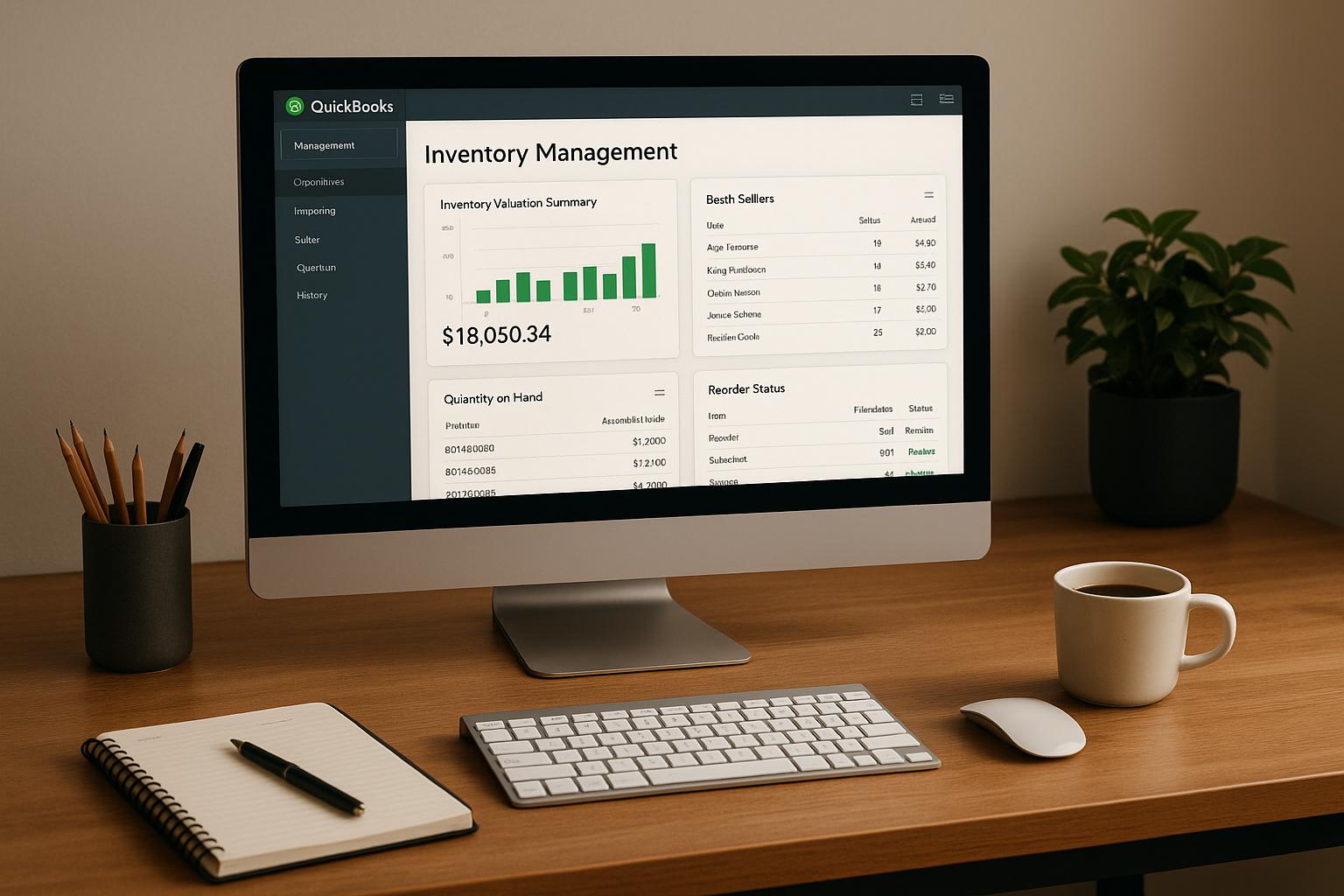
Pairing an advanced inventory management system with an optimized racking setup can transform warehouse operations. Warehouse Management Systems (WMS) replace outdated manual tracking methods with automated updates, offering a clear, real-time view of inventory levels and minimizing picking errors. These systems allow you to pinpoint exactly where each SKU resides within your racking layout.
Mobile barcode scanning is another game-changer. It enables workers to verify item locations, quantities, and details during warehouse tasks, cutting down on errors caused by manual data entry. Research shows that barcode systems can achieve an accuracy rate of 95–99%, while also reducing stock discrepancies by 40%.
The financial benefits are hard to ignore. By integrating automated inventory management with your racking system, you can streamline workflows, reduce labor costs, and improve both safety and operational accuracy.
"A warehouse is more than just a building; it's a dynamic environment where efficiency is measured in seconds and inches."
– Gujrat Steel
Inventory management software also supports essential rotation strategies. FIFO (First-In, First-Out) and FEFO (First-Expired, First-Out) tracking are particularly useful for perishable goods stored in selective or gravity flow racks. For high-density systems like drive-in or push-back racking, the software can handle LIFO (Last-In, First-Out) workflows while maintaining complete visibility into stock levels.
Specialized tools like Rapid Inventory take these capabilities to the next level, integrating seamlessly with racking systems to enhance overall warehouse efficiency.
How Rapid Inventory Works with Your Racking System
Rapid Inventory is designed to combine the advantages of inventory management software with your racking strategy, offering a seamless integration with QuickBooks Desktop. This system automates inventory tracking and syncs data between your accounting software and warehouse operations, ensuring consistency at every stage.
Its multi-location tracking feature makes it easy to monitor inventory across multiple warehouses or drill down to specific bins and rack positions within a single facility. The platform also optimizes picking routes by calculating the most efficient paths through your racking layout, guiding workers directly to each item's exact location.
For businesses that rely on FIFO and FEFO strategies, Rapid Inventory simplifies inventory rotation in selective racking or pallet flow systems. It also handles lot numbers, serial numbers, and batch tracking - essential for industries like food distribution and pharmaceuticals. With over 17 years of experience serving more than 400 customers, Rapid Inventory stands out for its user-friendly mobile picking capabilities and smooth onboarding process.
"Rapid Inventory helps us run our warehouse operations. Easy to use and reliable... we especially love the barcode scanning and mobile picking."
– Fernanda C, Director of Operations
The system offers real-time reporting, providing instant insights into on-hand inventory, reorder points, and rack-level inventory values. To make the transition effortless, it includes free training and onboarding, typically completed within 6–7 days. Pricing starts at $90 per user/month for the Pro plan (1–9 users) and $900 per month for the Unlimited plan (10+ users). Many businesses find that the investment quickly pays off through labor cost savings and improved accuracy.
Summary
Designing an efficient racking system requires careful planning. Start by measuring your warehouse’s total square footage, ceiling height, and identifying obstacles like support columns or dock doors. Evaluate your inventory profile - considering SKU counts, pallet sizes, weights, and turnover rates - to choose the most suitable racking type. To save time and labor, place high-velocity items near shipping areas. These initial steps lay the groundwork for a safe and efficient setup.
Adhering to safety standards is critical to protect both your investment and personnel. Ensure all uprights are securely anchored to the floor and maintain proper clearances below sprinkler systems. Perform weekly visual inspections and schedule annual audits with certified third-party engineers to maintain compliance.
Account for future growth by opting for modular racking systems and reserving 5–15% of your floor space for expansion. A well-planned racking system can typically pay for itself in 12–18 months. Adding integrated software solutions can further boost efficiency by streamlining warehouse operations.
To maximize your setup, implement inventory management software. Tools like Rapid Inventory offer real-time tracking, optimize picking routes, and support FIFO/FEFO strategies. These features can reduce picking times by up to 25% and cut errors by 30%.
FAQs
How do I choose between FIFO and LIFO storage?
Choosing between FIFO (First-In, First-Out) and LIFO (Last-In, First-Out) comes down to the nature of your inventory and what your business prioritizes.
- FIFO works well for items that are perishable or have a high turnover rate. It ensures that older stock is used or sold first, reducing waste and preventing spoilage. This method is especially common in industries like food, pharmaceuticals, or any sector where product freshness is critical.
- LIFO, on the other hand, is ideal for non-perishable goods or industries where accessing the most recently acquired stock is more practical. For example, electronics or fashion businesses may benefit from this approach, as newer inventory often aligns better with current trends or technology.
When deciding, think about factors like your product's shelf life, how quickly items move through your system, and how your storage is organized. Each method has its strengths, but the right choice depends on your specific operational needs.
What aisle width is needed for forklifts?
Forklift aisle widths generally fall between 10 to 12 feet for standard spaces. Larger equipment or heavier loads may require wider aisles, while very narrow aisles (VNA) are tailored for specialized machinery. The specific aisle width depends on factors like the forklift's size, pallet dimensions, and the overall warehouse layout.
How do I calculate safe rack load capacity?
To determine the safe load capacity of a rack, always start with the manufacturer's guidelines on maximum weight limits. Pay close attention to the strength of key components, such as beams and uprights, and factor in the overall design of the system, including beam length and the spacing between shelves. It's also important to consider safety aspects, like uneven weight distribution and potential dynamic loads. Finally, ensure the system aligns with standards set by organizations like ANSI and RMI to keep operations secure and compliant.