If you need direct access to every pallet, selective racking is usually the right place to start. I’d choose it based on six things: building height, pallet size and weight, SKU count, inventory flow, forklift type, and safety rules.
Here’s the short version:
- Single-deep selective racking gives you 100% pallet access
- Double-deep stores more pallets, but access drops and it usually runs LIFO
- Rack tops should stay 18 inches below sprinkler heads
- Typical aisle widths range from 5–13 feet, based on forklift type
- Beam and frame ratings must match your heaviest loaded pallets, not estimates
- Each rack row needs load signs, anchors, protection, and location labels
If I were planning a system today, I’d start with actual pallet data and usable warehouse clear height, then check whether the SKU mix calls for access or density. After that, I’d set beam length, frame depth, aisle width, and scanning labels around daily forklift travel and picking flow.
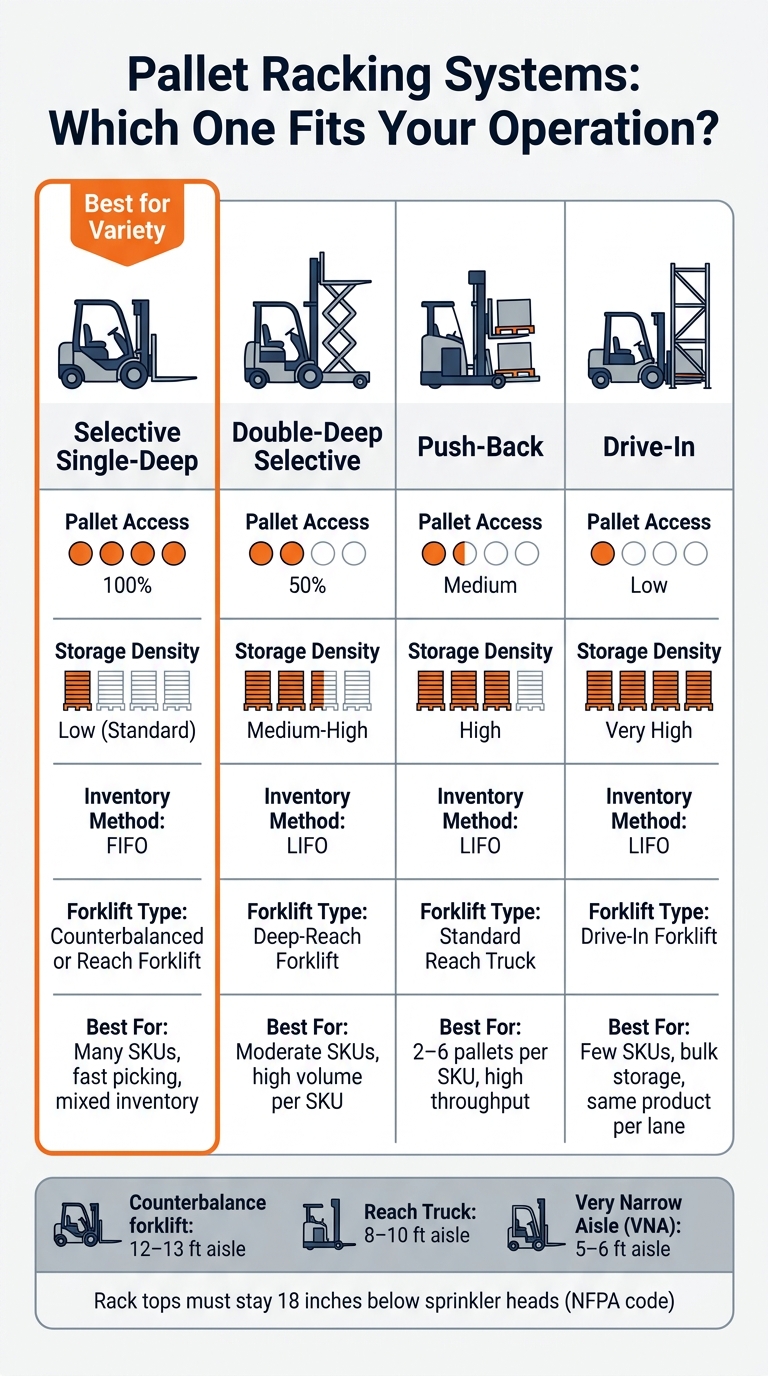
Pallet Racking Systems Compared: Selectivity, Density & Forklift Requirements
The Smart Way to Organize Your Warehouse | Selective Racking Benefits
sbb-itb-19ed50f
Quick Comparison
| System | Pallet Access | Density | Flow Method | Equipment |
|---|---|---|---|---|
| Selective, single-deep | 100% | Lower | FIFO | Standard forklift or reach truck |
| Selective, double-deep | 50% | Medium to high | LIFO | Deep-reach forklift |
| Push-back | Medium | High | LIFO | Reach truck |
| Drive-in | Low | Very high | LIFO | Drive-in forklift |
The main point is simple: pick the rack around how you store, move, and count inventory every day.
1. Define your warehouse, pallet, and inventory requirements
Before you ask for a quote, pull together three inputs: space, pallet load, and inventory flow. Those three details shape every rack choice.
Measure your usable warehouse space
Measure your usable floor area and your clear height. Clear height is the distance from the finished floor to the lowest overhead obstruction, like a sprinkler head, HVAC duct, or light fixture. Rack tops must stay at least 18 inches below sprinkler heads to meet NFPA fire codes.
List your SKU count, pallet count, and rotation method
Work from current inventory data. Track your active SKUs, pallets per SKU, and turnover rate. Add projected SKU growth for the next 12–24 months.
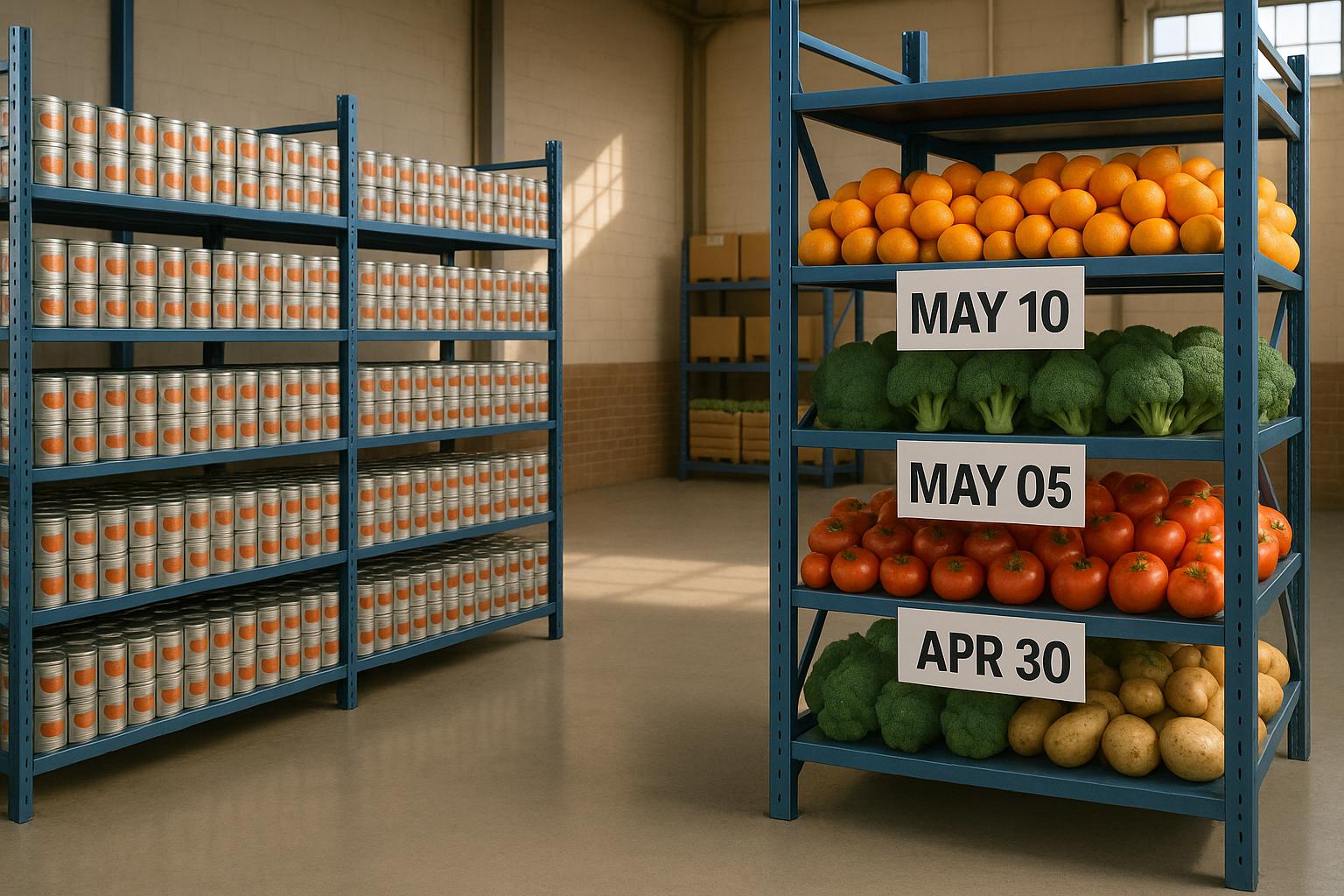
Your rotation method matters just as much as SKU count. Selective racking supports FIFO and FEFO because every pallet is directly reachable from the aisle. If you store dated or perishable goods, FIFO or FEFO is not optional. Use LIFO only for non-dated inventory.
High-turnover operations need faster access than slow-moving storage.
These counts show how much pallet access your layout needs.
Confirm pallet size, load dimensions, and maximum weight
Measure the loaded pallet, not the empty one. Use the loaded pallet footprint, not the nominal pallet size. Both affect beam length and aisle clearance.
For beam spacing, use loaded height, forklift lift clearance, and beam height. Choose a frame depth that supports the pallet without too much overhang.
Then weigh your heaviest loaded pallet. Match beam capacity to your heaviest uniformly distributed pallet load.
These measurements set your rack dimensions and aisle layout.
2. Decide whether selective pallet racking fits your operation
Once you’ve mapped your warehouse space, pallet specs, and SKU mix, the next step is simple: figure out whether selective racking lines up with how your operation actually works.
This choice comes down to three things: your SKU mix, pallet volume, and how inventory moves through the building. If you handle a lot of different products and need direct access to each pallet, selective racking is often a strong fit.
Understand single-deep and double-deep selective layouts
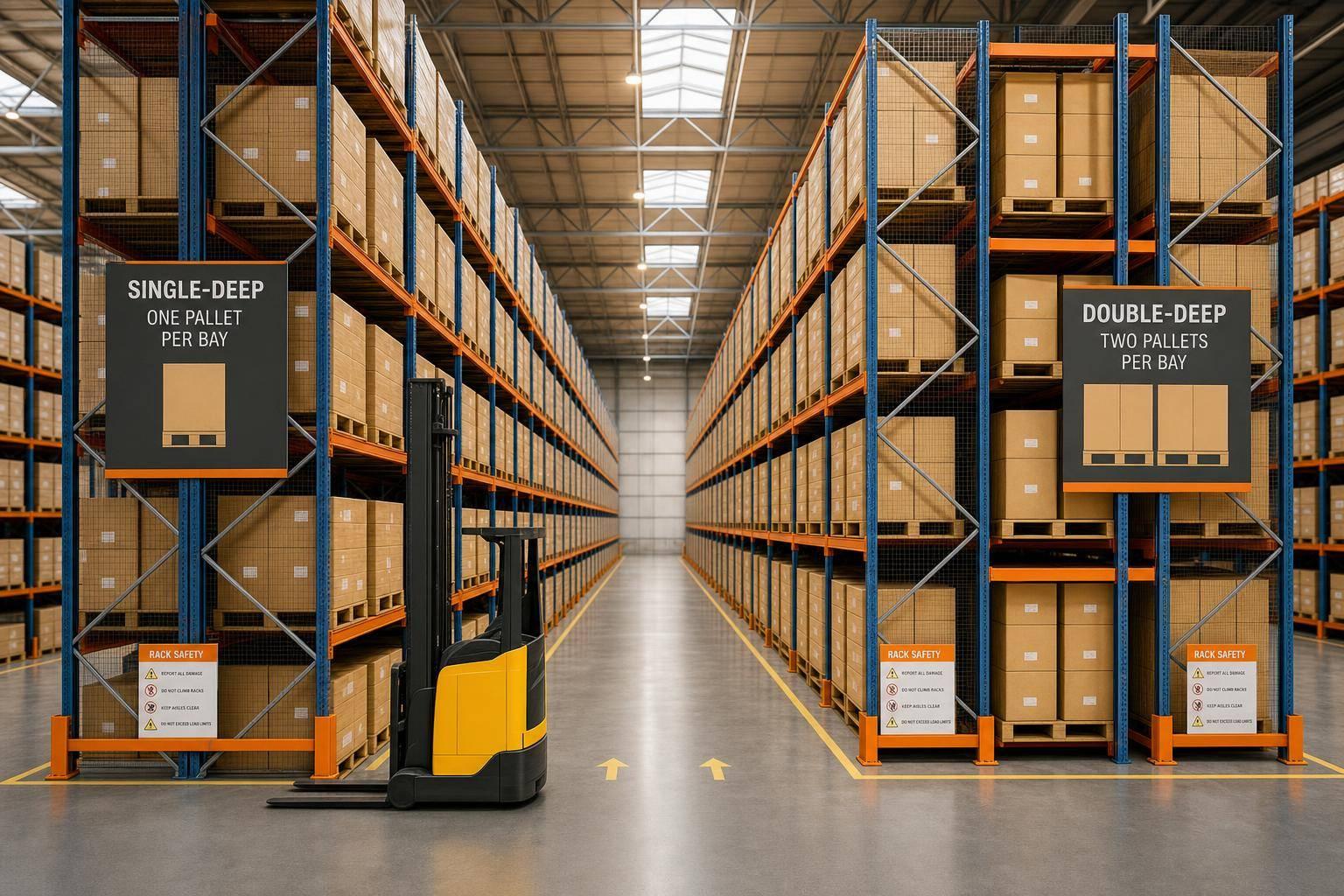
Single-deep is the standard setup. Every pallet position faces an aisle, so each pallet is easy to reach. It also naturally supports FIFO. That makes it a good fit when you manage many SKUs or need fast picking.
Double-deep stores pallets two rows deep. That gives you more storage density, but there’s a tradeoff: it runs as LIFO because the front pallet blocks the rear one. You’ll also need a deep-reach forklift to get to the back row. Double-deep tends to work best when you carry a moderate number of SKUs and have enough pallet volume per SKU to make two-deep storage worth it.
Match selective racking to your operation
Selective racking fits operations with:
- many SKUs
- frequent picking
- mixed pallet sizes and weights
- standard forklifts
"Selective rack works best when storing a wide variety of SKUs, while a drive-in pallet racking system would work best when you have a large quantity of a few SKUs." - American Storage & Logistics
If your operation is high-velocity, selective racking can help cut time spent shifting blocking pallets out of the way. That’s a big deal on a busy floor, where small delays add up fast.
Compare selective, push-back, and drive-in racking options
The table below shows how these systems stack up.
| System | Selectivity | Storage Density | Inventory Method | Forklift Requirement | Ideal SKU Profile |
|---|---|---|---|---|---|
| Selective (Single-Deep) | 100% | Standard (Low) | FIFO | Counterbalanced or reach forklift | Many SKUs, fast picking, mixed inventory |
| Double-Deep Selective | 50% | Medium-High | LIFO | Deep-reach forklift | Moderate SKUs, high volume per SKU |
| Push-Back | Medium | High | LIFO | Standard reach truck | 2–6 pallets per SKU, high throughput |
| Drive-In | Low | Very High | LIFO | Drive-in forklift | Few SKUs, bulk storage, same product per lane |
After you settle on the layout type, you can size the racks, beams, and aisle width around your pallet and forklift data.
3. Calculate rack size, capacity, and aisle layout
With the layout set, the next step is simple: get the dimensions right. This is where storage plans turn into actual rack specs. Once you know the layout, size the rack around the pallet, the forklift, and the building clearances. Even small errors here can eat up floor space or push the rack past its load limit.
Size uprights and beams from your pallet data
Start with the pallet itself. For 48 x 40 GMA pallets, 42-inch-deep uprights leave 3 inches of overhang in the front and back.
Beam length depends on how many pallets you want on each level:
- Use a 96-inch beam pair for two 40-inch pallets per level
- Use 144-inch beams for three pallets per level
That gives you a clean fit without forcing pallets too tight together.
Check beam and frame load ratings
Load ratings aren't the kind of thing you want to guess on. Estimate the beam load by multiplying the heaviest pallet weight by the number of pallets per level. Then check both the beam and frame ratings on the manufacturer's chart.
The frame rating has to cover the total weight across all rack levels combined. So even if each beam level looks fine on its own, the full rack still has to stay within the frame limit.
You also need load capacity signs on every row. Those signs should show the maximum weight per beam level and the maximum weight per upright frame.
Set aisle width based on your forklift type
After rack depth and load capacity are nailed down, aisle width becomes the big space decision. With selective racking, access stays easy, so aisle width is where storage density and pick speed start to pull against each other. The main factor here is the forklift's turning radius.
| Forklift Type | Aisle Width |
|---|---|
| Counterbalance | 12–13 ft |
| Reach Truck | 8–10 ft |
| Very narrow aisle (VNA) | 5–6 ft |
Narrower aisles can fit more rack into the same footprint, but they also call for more specialized equipment.
Before you lock in rack height, keep the top load 18 inches below sprinkler heads.
4. Add the right configuration, safety features, and inventory controls
Once the layout is set, the next job is simple: make the rack safe to use and easy to track.
Choose safety and protection accessories
Start at the floor. Each upright should be anchored to the slab with code-compliant bolts. If the floor isn’t level, place steel shims under the base plates before anchoring so the frames stay plumb.
For back-to-back rack rows, install row spacers to keep both rows lined up and to maintain the flue space needed for sprinkler coverage.
Wire mesh decking can help when fire code requires it or when you’re storing mixed pallet sizes that need added support while still allowing sprinkler penetration. To protect uprights, use column guards in standard heights and heavy-duty end-of-aisle guards. They take the hit from forklifts before the steel does.
Every row also needs a posted load plaque. It should show the maximum weight per beam level and per upright frame.
Set inspection and maintenance rules
After installation, rack inspection becomes part of day-to-day warehouse work. Run monthly staff inspections and schedule annual inspections with a qualified rack engineer.
During walk-throughs, look for:
- Bent uprights
- Excessive beam deflection
- Missing safety clips
- Loose anchor bolts
If any part is damaged, unload it at once and replace it. Do not drill, weld, or cut rack members without engineering approval. Damaged racks should be taken out of service right away.
Connect rack locations to barcode scanning and Rapid Inventory
Once the rack is protected, label each location so it fits your inventory process. Every rack position needs a clear, consistent location ID, often in a Row-Bay-Level-Position format.
Apply durable barcode labels to rack positions and pallets. Use magnetic holders for locations that change and adhesive labels for fixed spots.
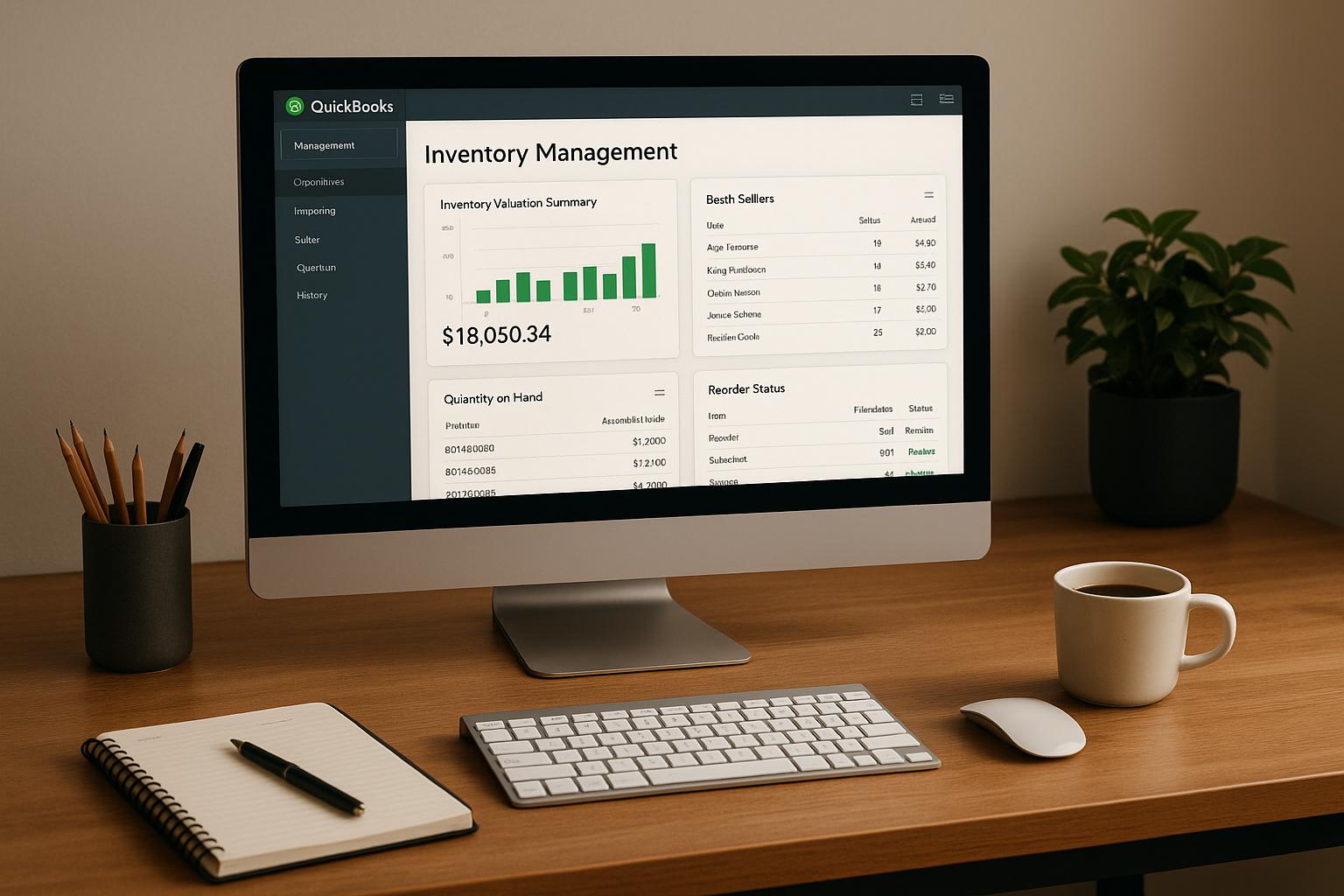
With barcode scanning, you can track receiving, picking, and transfers by rack location. Rapid Inventory can connect those rack locations to barcode scanning, FIFO/FEFO, lot and serial tracking, and two-way QuickBooks Desktop sync.
Conclusion: Choose selective pallet racking with layout, safety, and workflow in mind
Choose selective pallet racking in this order: building limits, pallet data, inventory flow, rack size, aisle width, safety, then tracking. Once those basics are in place, make sure the layout works for daily picking and safe forklift travel.
Selective racking gives you 100% direct access to every pallet position. But that access only helps if the layout fits your forklift fleet, your aisle widths are set the right way, and your beam capacities are checked against your actual load weights - not rough guesses.
After the rack layout is finalized, add safety hardware and location labels. It’s smart to plan for safety gear and future growth in the first design pass so you don’t end up paying for expensive retrofits later. Label each rack location so barcode scanning and Rapid Inventory keep inventory tied to the right bin.
The best system matches how your team picks, stores, protects, and tracks inventory every day.
FAQs
How do I know whether single-deep or double-deep racking is better for my warehouse?
It depends on your storage density needs, SKU count, and equipment. Single-deep racking is usually the lower-cost, more flexible choice. You get direct access to every pallet, which makes it a strong fit for high-SKU operations and fast picking.
Double-deep racking can increase storage density by about 40% because it stores pallets two deep. The tradeoff is that it needs specialized reach trucks, and you can't get to the rear pallet until the front pallet is moved.
What pallet measurements matter most before ordering selective racking?
Before ordering selective racking, measure your pallet width, length, and loaded height, including any product overhang. Those numbers decide the beam length and the vertical beam spacing your setup needs.
You should also weigh your heaviest loaded pallet so you can confirm the required load capacity for both the beams and uprights. And check the frame depth carefully: it should allow a 3-inch overhang so the pallet sits fully supported on the beams.
How can I plan for future SKU growth without redesigning the whole rack layout?
Plan for growth from day one with the modular design of selective pallet racking. In many cases, it costs less to build in 15% to 20% extra capacity at the start than to retrofit the system later.
Use realistic 3- to 5-year growth estimates when you map out the space. Pick beam heights that can be adjusted as pallet sizes change, and work with a professional designer on a layout that leaves room to expand.